- Quick Take
- 1 Basic Information
- Tamachi Station
- 2 Area Characteristics
- 3 Safety and Night Atmosphere
- 4 Rent Prices
- 5 Shopping Environment
- 6 Medical Facilities
- 7 Local Restaurants
- 8 Ramen
- 9 Train Lines and Connectivity
- 10 Access to Major Stations
- 11 Shrines, Parks, and Culture
- Kasuga Shrine
- Shibaura Park
- 12 Disaster Risk
- 13 Pros and Cons
- 14 Who It’s For
- 15 Summary
Quick Take
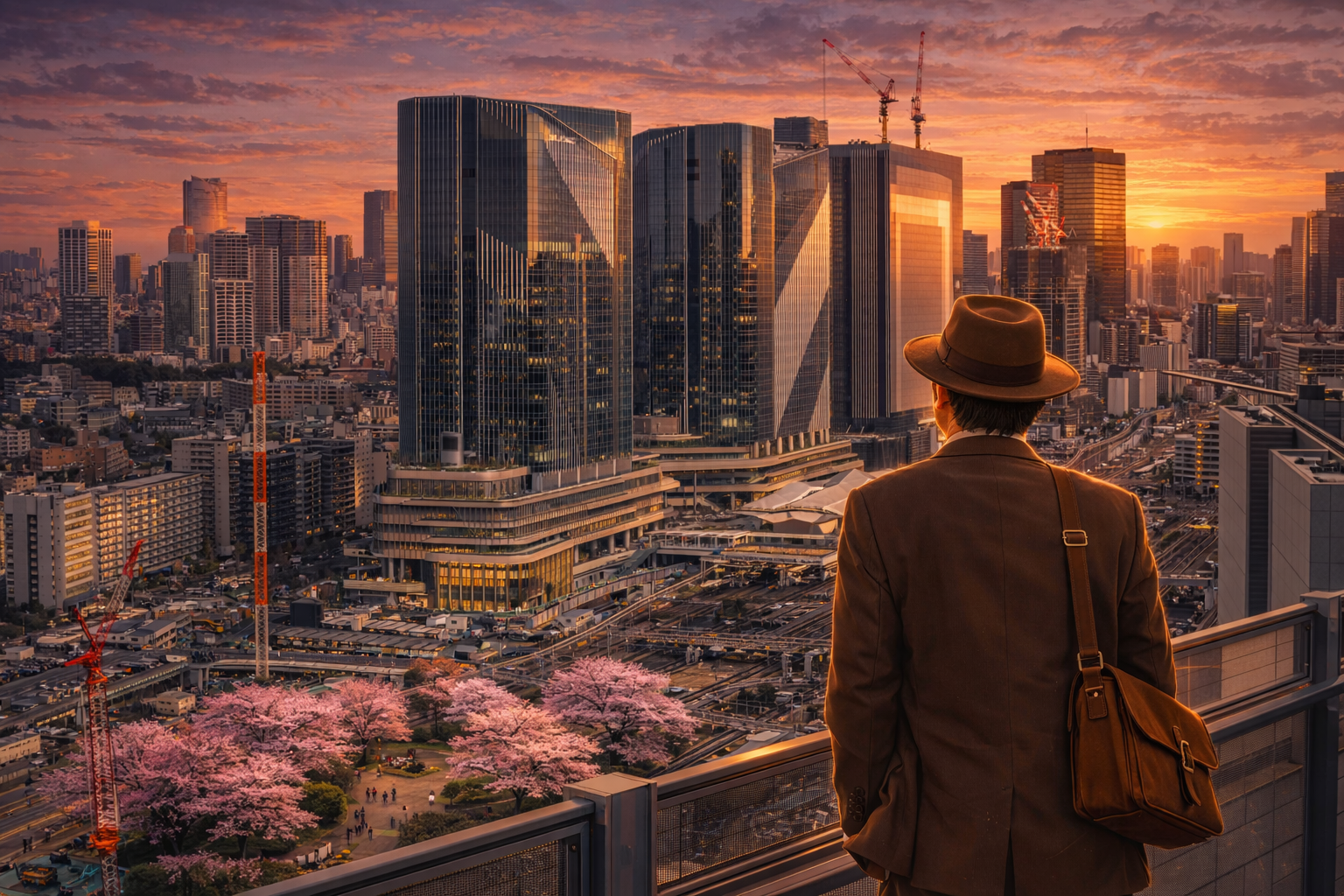
Tamachi is a place where you don’t simply “live in the neighborhood,” but instead build your life by using the functions of the city around you. At night, the flow of office workers and students quietly fades, leaving behind a calm, almost empty atmosphere.
The area feels well-developed at first glance, yet there’s a subtle disconnect in how daily life fits together.
Living here means you stop relying on the neighborhood itself and start designing your own lifestyle.
1 Basic Information


Tamachi Station
Tamachi developed as part of the historic gateway routes of Edo and has evolved into an area where business and education intersect.
Located near the old Tokaido route, it has long been a point of movement and connection.
Today, it serves as a key station on the JR Yamanote and Keihin-Tohoku Lines, supporting central Tokyo mobility.
The east side (Shibaura) is filled with redevelopment projects, high-rise apartments, and office buildings.
The west side (Mita) retains a more traditional atmosphere, centered around Keio University.
Mornings are dominated by commuters, daytime mixes office workers and students, and nights quickly quiet down.
Living here feels like being part of the city’s flow rather than settling into a fixed neighborhood.
2 Area Characteristics
Tamachi is a high-functioning but fragmented place to live.
Unlike Hamamatsucho, which is heavily business-focused, or Shimbashi, known for nightlife,
Tamachi sits in between—but leans toward neither completely.
Shibaura is clean and modern but lacks cohesive daily-life infrastructure.
Mita offers livability, but the experience varies block by block.
The presence of Keio University adds a unique mix of students, professionals, and corporate activity.
Living here, you begin to notice that the city doesn’t naturally support your daily routine—you have to create it yourself.
3 Safety and Night Atmosphere
Safety is one of Tamachi’s strongest points, even within central Tokyo.
There are no major nightlife districts, so serious incidents are rare.
At night, the area is mostly office workers heading home and students, with a generally calm atmosphere.
However, some areas become very quiet late at night.
Shibaura is especially quiet, while Mita retains a bit more human presence.
Living here means experiencing a safe but slightly understated nighttime environment.
4 Rent Prices
Tamachi offers high functionality, but the cost can feel slightly mismatched with everyday livability.
Studios to 1K apartments range from about ¥90,000 to ¥130,000.
1LDK units range from ¥160,000 to ¥250,000.
Tower apartments in Shibaura are significantly more expensive.
Mita tends to offer slightly more reasonable options.
Living here makes you more conscious of the balance between cost and convenience.
5 Shopping Environment
The conclusion: it exists, but it’s not seamless.
Supermarkets are available, but they often feel slightly inconvenient—whether due to distance, pricing, or layout.
Many options are located inside commercial complexes or redevelopment areas,
which don’t always feel like easy, everyday stops.
As a result, shopping often requires planning.
Living here means structuring your daily errands rather than doing them casually.
6 Medical Facilities
Healthcare is available, but not always aligned with daily routines.
Clinics are present, but not always located along your natural paths.
Larger hospitals are typically accessed in surrounding areas.
Living here means approaching healthcare in a more planned way.
7 Local Restaurants
Murasakiyama
Genre: Ramen
Price: ¥900–¥1,200
https://www.google.com/search?q=むらさき山+田町
Local feel: Long lunchtime lines filled with office workers.
Future image: Becomes a regular part of your weekday routine.
Motsufuku
Genre: Motsu hot pot
Price: ¥3,000–¥4,500
https://www.google.com/search?q=もつ福+田町
Local feel: Popular for after-work group gatherings.
Future image: A go-to spot for casual evenings out.
Kasugatei (Mita)
Genre: Abura soba
Price: ¥800–¥1,200
https://www.google.com/search?q=春日亭+三田
Local feel: A mix of students and office workers sharing the space.
Future image: A quick, reliable everyday meal.
8 Ramen
Takemotoya
Price: ¥800–¥1,100
https://www.google.com/search?q=武源家+田町
Local feel: Rich flavors with strong student support.
Future image: A satisfying choice on tiring days.
Hirugao
Price: ¥900–¥1,200
https://www.google.com/search?q=ひるがお+田町
Local feel: Light flavors, popular with a broader crowd.
Future image: A go-to for lighter meals.
9 Train Lines and Connectivity
Tamachi offers strong commuting efficiency, but nothing particularly unique beyond that.
The Yamanote Line connects to major Tokyo hubs.
The Keihin-Tohoku Line allows smooth north-south travel.
It’s reliable, but not exceptional.
Living here means transportation is easy, but rarely exciting.
10 Access to Major Stations
Shinagawa: ~4 min (last train around 00:20)
Tokyo: ~10 min (last train around 00:10)
Shimbashi: ~8 min (last train around 00:20)
Shibuya: ~20 min (last train around 00:00)
Living here means major areas feel like extensions of your neighborhood.
11 Shrines, Parks, and Culture
Kasuga Shrine


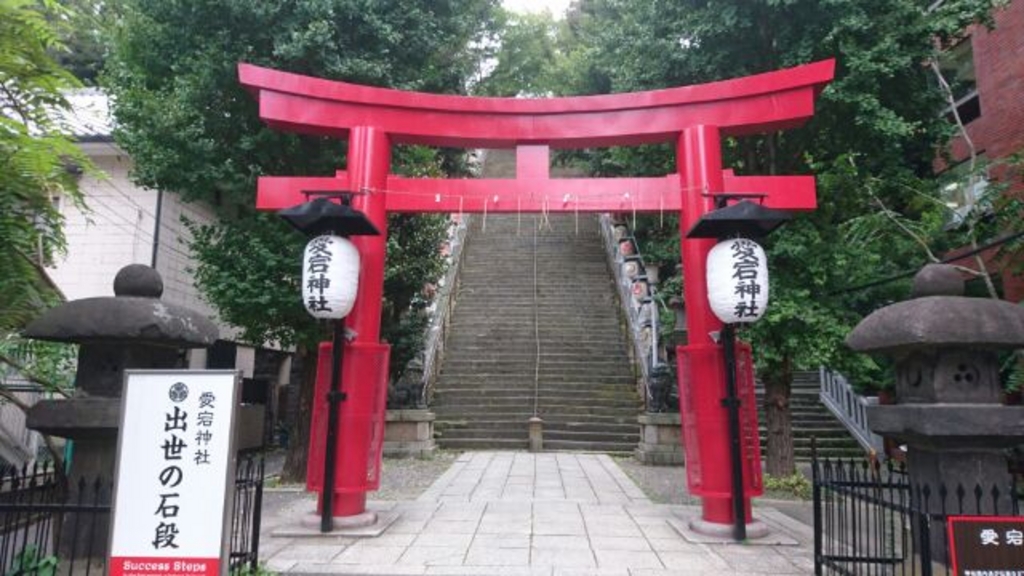

Kasuga Shrine is a quiet, understated space embedded in the neighborhood.
It doesn’t stand out, but it offers a calm presence within daily life.
Living here means having small moments of stillness within the city.
Shibaura Park


Shibaura Park feels like an extension of everyday life.
It’s used by families, walkers, and people going about their routines.
Living here means having nature quietly integrated into your daily life.
12 Disaster Risk
Risk levels vary clearly depending on the area.
Shibaura, being reclaimed land, carries some liquefaction risk.
Mita sits on more stable ground.
High-rise buildings may experience longer shaking during earthquakes.
Living here means location choice directly affects your safety profile.
13 Pros and Cons
Pros
- Strong access to central Tokyo
→ Commuting is efficient - Good safety
→ Stable and calm environment - Quiet atmosphere
→ Easy to relax
Cons
- Fragmented daily life
→ Routines are not seamless - Shopping inconvenience
→ Requires planning - Still developing
→ Relies on surrounding areas
Living here means taking control of how your daily life is structured.
14 Who It’s For
Tamachi suits people who can design their own lifestyle.
- People who eat out often
- Those prioritizing central access
- Work-focused individuals
And especially:
👉 People who can afford to own a car
Parking alone can cost around ¥30,000–¥60,000 per month.
Including insurance and fuel, total costs can easily reach ¥50,000–¥100,000 monthly.
However, having a car dramatically changes the experience:
- Shopping becomes easier
- Movement gaps are eliminated
- Weekend options expand significantly
Access to areas like Shinagawa, Ginza, and the waterfront becomes seamless.
Living here means overcoming the city’s weaknesses through your own resources.
15 Summary
Tamachi is a high-functioning area where daily life depends on how you build it.
Mornings are defined by commuting, afternoons by business and student activity, and nights by quiet streets.
Weekends often involve leaving the area to fully enjoy the city.
With Keio University shaping the atmosphere,
the area blends youth, history, and corporate presence in a unique way.
From its roots as part of Edo’s transportation network to ongoing redevelopment,
Tamachi remains a place that feels unfinished.
It offers top-tier convenience,
but the quality of life depends heavily on the individual.
This is not a place where the city takes care of your lifestyle.
It’s a place where you build it yourself.
Living here changes how you define “living in Tokyo.”
Check nearby Yamanote Line stations
← Hamamatsucho Station Tokyo Living Guide | Tamachi Station | Takanawa Gateway Station Tokyo Living Guide →