- In One Quick Line
- 1 Basic Information
- 2 Character of the Area
- 3 Safety and the Feel of the Night
- 4 Rent Levels
- 5 Shopping Environment
- 6 Medical Access
- 7 Local Restaurants
- 8 Ramen
- 9 Character of the Lines
- 10 Access to Major Stations
- 11 Shrines, Parks, and Cultural Facilities
- 12 Disaster Risk
- 13 Advantages and Disadvantages
- 14 Who This Area Suits
- 15 Summary
In One Quick Line
Tokyo Station is not simply a convenient station in central Tokyo. It is a giant living machine where the functions of Tokyo itself have been compressed into one place.
At night, the Marunouchi side feels strangely over-composed, with the red-brick station building and office towers glowing in a way that is elegant but slightly unreal. Tourists and office workers are both there, yet the atmosphere remains oddly calm.
On the other hand, the moment you go down into the Yaesu side, the air changes completely. Ramen, souvenirs, character shops, and streams of people meeting up or rushing through all hit you at once.
If you live here, you will not get a quiet neighborhood in the usual sense. Instead, you get a daily life that lets you use Tokyo itself to the fullest.
1 Basic Information

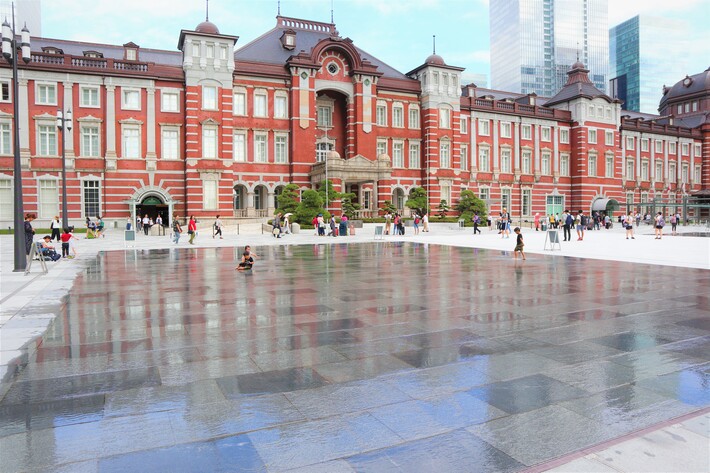
Tokyo Station opened in 1914.
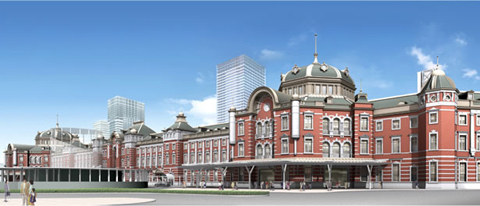
The Marunouchi station building, the famous red-brick face of Tokyo Station, is a historic structure. After its roof and interiors were damaged in wartime air raids, it was used for many years in a simplified postwar form, then restored in 2012 to an exterior close to its original three-story design.
One of the classic architectural details people mention is the pair of domes in the Marunouchi building.
Once you know about the ceiling decorations and zodiac reliefs, Tokyo Station stops feeling like just a place you pass through and starts to feel like an actual work of architecture.
Most people rush through it every day, but if you pause for a moment, you can suddenly feel the thickness of time built into the place. That is one of this station’s greatest strengths.
From a daily life perspective, the real value of Tokyo Station is not just the number of train lines. It is how much it reduces the stress of moving around.
The Yamanote Line, Keihin-Tohoku Line, Chuo Line, Tokaido Line, Yokosuka Line, Sobu Rapid Line, Keiyo Line, Ueno-Tokyo Line, and multiple Shinkansen lines all gather here, and the underground network also connects your daily flow to Otemachi and Nihonbashi.
Commuting, business trips, airport access, shopping, and dinner plans can all be handled almost as side tasks.
In the morning, Tokyo Station is not really a tourist station. It is a work station.
On the Marunouchi side, people walk fast. You see people pulling suitcases and others carrying laptops, and almost everyone looks like they know exactly where they are going.
By daytime, more people stop to take photos. By evening, business travelers returning from trips, people meeting up, and people coming back from dinner all mix together.
The atmosphere changes several times in a single day.
Once you live here, Tokyo Station starts to feel less like a station and more like the core of a city whose personality changes with the hour.
2 Character of the Area
Put simply, Tokyo Station is not one neighborhood. It is a station holding two very different cities back to back: Marunouchi and Yaesu.
The Marunouchi side brings together historic architecture, office towers, luxury hotels, and a carefully designed plaza, creating one of the most refined cityscapes in Tokyo.
The area in front of the red-brick station building is broad and open, with less of the visual pressure that Tokyo often has.
If you walk a little toward the Imperial Palace, the sky suddenly feels wider, and there are moments when you almost forget you are standing in the center of Tokyo.
The Yaesu side is much more practical and much more mixed.
Shinkansen passengers, bus users, highway bus travelers, underground malls, souvenir shoppers, restaurants, people meeting up, and people simply passing through are all mixed together.
Daily life feels denser underground than above ground.
Walking around Tokyo Station here feels less like moving through a station and more like moving through a huge underground commercial city.
What makes Tokyo Station especially interesting is that its appeal does not end with the platforms and ticket gates.
On the Marunouchi side, you get architecture and urban scenery. On the Yaesu side, consumption and practicality. Walk a little toward Nihonbashi and you get old established shops. Head toward Kyobashi and you get more adult, refined dining. Go underground and suddenly you get ramen and character culture in the same zone.
It is one station with too many faces.
That is exactly what makes it fascinating, and also one reason it can feel a little exhausting if you actually live here.
Living here naturally teaches you to use the one-kilometer radius around Tokyo Station in different ways.
If you stop thinking only in terms of the station front and instead treat Marunouchi, Yaesu, Nihonbashi, and Kyobashi as one living zone, your evaluation of the area changes completely.
3 Safety and the Feel of the Night
The answer is pretty simple: the area is safe, but the night can feel emotionally thin.
The Marunouchi side is well controlled, well maintained, and not the kind of place that turns into a noisy drunk district.
There is strong security and management, and many of the people around are hotel guests, office workers, or visitors of a certain type.
For a woman walking alone at night, it is one of the more reassuring major-station areas in Tokyo.
That said, the night air can feel a little cold.
What comes first is not the smell of daily life, but the polished face of the city.
Office lights, taxis, hotel entrances, and people moving past at steady intervals.
It is beautiful, but it is not the kind of night that leaves a strong sense of ordinary neighborhood life.
The Yaesu side feels much more human.
Restaurants in the underground mall and around the gates stay active into the evening, and the smells of ramen and set meals linger in the air.
Still, it does not feel rough in the way Shinjuku or Ueno can.
Tokyo Station at night is not really a place for nightlife. It is more a place for eating before going home.
Late at night, the Marunouchi side becomes so quiet that it feels almost strange.
The Yaesu side, even after the main streams of people thin out, still keeps a faint sense that the city is moving through the underground spaces and surrounding roads.
If you live here, you end up learning with your body that the quality of the night is completely different on each side of the same station.
4 Rent Levels
There is not much housing supply right around Tokyo Station itself.
So when people say they want to live near Tokyo Station, what they usually mean in practice includes Nihonbashi, Kyobashi, Hatchobori, and Kanda.
Rent is, of course, high. Even a studio is priced like central Tokyo, and once you move into 1LDK territory or above, it becomes very clear that you are paying for location more than the room itself.
This is an area where you are buying the value of cutting commuting time and travel time, not the warmth or spaciousness of daily home life.
It suits people who want to use Tokyo itself as their main living space rather than people who want home to be the center of life.
The real feel on the ground is that people paying rent here tend to choose a lifestyle where the city outside matters more than the home inside.
For anyone who wants a self-cooking-centered life, neighborhood ties, or a deeply local residential atmosphere, the cost performance is honestly pretty poor.
For people who really value saving fifteen minutes in the morning or twenty minutes at night, though, the logic of the high rent makes sense.
5 Shopping Environment
In short, Tokyo Station is shopping heaven, but not a heaven for ordinary everyday supermarkets.
Daimaru Tokyo, Gransta, Tokyo Station First Avenue, Yaechika, station shops, souvenirs, lunch boxes, deli food, and sweets are all extremely strong.
For gifts, snacks, boxed meals, one extra dish on the way home, or a small reward purchase, this area is incredibly complete.
But from the perspective of an everyday resident, it has a clear weakness.
It is not very strong when it comes to normal supermarkets where you buy meat, fish, and vegetables cheaply in bulk and run an ordinary home-cooking routine.
It looks convenient, but it is not especially friendly to a household budget.
The power of department store basements and station deli food is so strong that “I’m tired, I’ll just buy something on the way home” becomes an easy habit.
Yaechika is especially important.
It is not just an underground passageway. It functions almost like the hidden back route of daily life around Tokyo Station, where you can handle meals, shopping, killing time, meeting people, and avoiding rain all at once.
Once you get used to it, it becomes extremely convenient.
If you are not used to it, it can feel like a small underground maze.
If you live here, convenience and high daily cost arrive from the same place at the same time.
That is one of the most urban, slightly nasty little truths about life around Tokyo Station.
6 Medical Access
Medical access is generally good.
There are plenty of clinics around Marunouchi, Otemachi, and Nihonbashi, and access to major hospitals is also strong.
At the same time, it does not really feel like the kind of area where you have a familiar local family doctor. The impression is more of a highly functional medical infrastructure designed for office workers.
In other words, the medical environment around Tokyo Station feels less like warm neighborhood care and more like urban infrastructure at full efficiency.
It is easy to visit between work tasks, the routes from the station are convenient, and the whole system works smoothly in a modern way.
There is usually not much to complain about, but it does not feel especially local or personal.
That, too, fits the character of this area.
7 Local Restaurants
The key point here is that if you only look at station restaurants, you are only seeing half of Tokyo Station.
The real interest lies in the wider dining zone that includes Marunouchi, Yaesu, Kyobashi, and Nihonbashi.
Tempura Fukamachi
Genre: Tempura
Price range: Around 10,000 yen at lunch and from the 20,000 yen range at dinner
Google search URL
https://www.google.com/search?q=てんぷら+深町+京橋
This famous Kyobashi restaurant shows one of the strengths of life around Tokyo Station: you can actually fold a truly serious tempura experience into ordinary city life.
In the middle of central Tokyo, you can still feel the season through the way the oil and ingredients are handled.
Once you know a place like this, Tokyo Station stops being just a transfer point.
Walking back toward Yaesu after eating here can make even the station-front crowds look a little more refined.
Muromachi Sunaba Nihonbashi Main Store
Genre: Soba
Price range: From around 1,500 yen
Google search URL
https://www.google.com/search?q=室町砂場+日本橋本店
A long-established soba shop in Nihonbashi.
One of the great luxuries of this area is that places like this are simply within everyday reach from Tokyo Station.
On a dry winter day, eating a hot bowl of soba at an old shop and then heading home feels exactly right here.
The fact that you can visit an old classic not as a tourist but as part of normal life is one of the real pleasures of the Tokyo Station area.
Isehiro Kyobashi Main Store
Genre: Yakitori
Price range: Around 3,000 to 6,000 yen
Google search URL
https://www.google.com/search?q=伊勢廣+京橋本店
It is not flashy, but it carries the atmosphere of an adult everyday restaurant in the Tokyo Station area.
It is less formal than a business dinner and less loose than an izakaya, which makes it fit naturally into evenings for people working around Tokyo Station.
A life where you drift into a place like this after work is very well suited to this district.
Curry Shop Alps
Genre: Curry
Price range: Around 1,000 yen
Google search URL
https://www.google.com/search?q=カレーショップ+アルプス+八重洲
This is one of the names that comes up in the B-class gourmet conversation around Yaesu.
It is quick, unpretentious, and filling.
There are plenty of polished, shiny restaurants around Tokyo Station, which is exactly why places like this that support an ordinary weekday lunch feel so valuable.
A plate like this, eaten in the flow of the underground district, captures the real daily-life feel of the Yaesu side.
Tsujihan Nihonbashi Main Store
Genre: Seafood bowl
Price range: Around 2,000 yen
Google search URL
https://www.google.com/search?q=つじ半+日本橋本店
This is a practical reward-type restaurant within reach of Tokyo Station.
It works well both when a friend is visiting and when you just want something satisfying by yourself.
Around Tokyo Station, restaurants tend to fall either into the high-end category or the chain-store category, so places like this that fill the middle ground are extremely useful.
Last Trains and Taxi Fares
One of Tokyo Station’s biggest strengths is that last trains run relatively late in many directions.
The Yamanote Line, Chuo Line, Keihin-Tohoku Line, Tokaido Line, and other major routes all spread out from here, and it remains comparatively easy to get back to major Tokyo hubs until fairly late.
That said, last train times vary by line, day of the week, and timetable revisions, so you always need to check the exact schedule on the day you use it.
What matters in real life is that even if you miss the last train, the situation is not hopeless.
Tokyo Station is also one of the stronger places in Tokyo for catching a taxi, and even late at night it is still relatively easy to find one.
As a rough guide:
Around Shinbashi Station: about 1,500 to 2,500 yen
Around Ueno Station: about 2,500 to 4,000 yen
Around Shinjuku Station: about 5,000 to 7,500 yen
Around Shibuya Station: about 6,000 to 8,500 yen
These are only rough estimates, and the actual fare can change depending on late-night surcharges and traffic. Still, Tokyo Station is not the kind of place where missing the last train means total disaster.
That is a real source of security for anyone living in or regularly using this area.
If you live here, you naturally start building both last trains and taxis into the structure of your life.
8 Ramen
In short, Tokyo Station is a place where ramen does not stay at the level of mere station food.
And Tokyo Ramen Street and Tokyo Ramen Yokocho, while similar at a glance, actually serve slightly different roles.
Tokyo Ramen Street, inside Tokyo Station First Avenue, feels more like a concentrated place to experience famous Tokyo ramen names.
It has a bit of an event feel to it, and works well before or after business trips or sightseeing.
Tokyo Ramen Yokocho, on the Yaesu underground side, feels more connected to ordinary daily use.
It fits the idea of grabbing a bowl on the way home from work much more naturally.
Rokurinsha
Genre: Tsukemen
Google search URL
https://www.google.com/search?q=六厘舎+東京駅
This is almost a symbol of ramen at Tokyo Station.
The lines themselves have become part of the scenery, and the shop plays the role of a Tokyo Station landmark.
On some days, the wait makes it a bit heavy for everyday use, but its presence is so large that never going at all would almost feel strange.
Soranoiro NIPPON
Genre: Ramen
Google search URL
https://www.google.com/search?q=そらのいろ+NIPPON+東京駅
This is an easy choice when you want something not too heavy.
Since eating out around Tokyo Station can wear your stomach down after a while, having a lighter option like this is quietly valuable.
Because this is a district where outside meals pile up day after day, a slightly gentler bowl can really matter.
Nagaoka Shokudo
Genre: Soy sauce ramen
Google search URL
https://www.google.com/search?q=長岡食堂+東京ラーメン横丁
If you want to get the feel of the Yokocho side, this is one good candidate.
It feels less like sightseeing ramen and more like the kind of ramen you return to as part of ordinary life.
Once places like this enter the flow of the Yaesu underground area, Tokyo Station starts to shift from being just a transport hub into part of a real living zone.
9 Character of the Lines
Tokyo Station’s real strength is not simply that it has many train lines. It is that you can change your exit and your route depending on your purpose.
You can head toward Shinjuku, toward Shinagawa, toward Yokohama, toward the airports, or toward the Tohoku, Hokuriku, and Tokaido Shinkansen lines.
Different people use it for completely different reasons, and yet the station absorbs all of that.
In daily life, being close to Tokyo Station changes how you build your schedule.
You can go to Kanagawa after work, catch an early-morning Shinkansen, have dinner and then head home by a different route, and none of that feels especially troublesome.
It is a station that increases your mobility.
At the same time, for some people, it also makes life itself a little more rushed.
A station from which you can go anywhere at any time tends to give you momentum rather than calm.
10 Access to Major Stations
Shinjuku Station: around 15 minutes
Shibuya Station: around 20 minutes
Shinagawa Station: around 10 minutes
Ueno Station: around 8 minutes
That sense of “basically everywhere important is close enough” is more powerful than the numbers alone suggest.
It is not only the travel time. It is the number of alternative routes.
Even if one line goes down, there is often another way out.
That is the real convenience of Tokyo Station.
11 Shrines, Parks, and Cultural Facilities
Shrine


There is no single overwhelmingly iconic shrine right beside Tokyo Station itself, but if you widen your living zone a little, places like Hie Shrine come into range.
Life around Tokyo Station becomes much richer when you stop trying to complete everything just around the station front and instead think in terms of a one- or two-kilometer radius.
The strength of Hie Shrine is how clearly the air changes once you enter it, despite being in the middle of central Tokyo.
When you move from office towers into the shrine grounds, even the texture of sound changes slightly.
When you spend your days in an area as function-driven as Tokyo Station, the value of places like this becomes much easier to feel.
If you live here, it makes a real difference to have one place where you can reset your mind.
Park
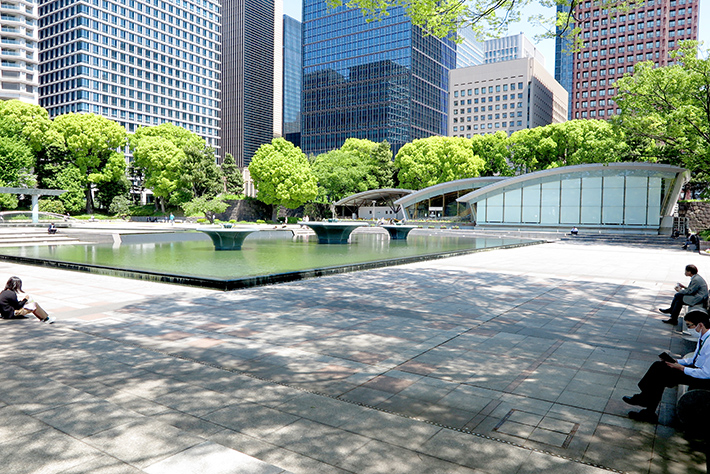
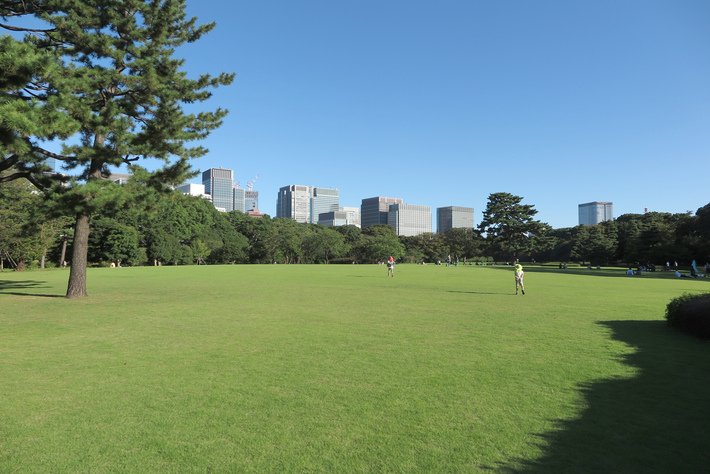
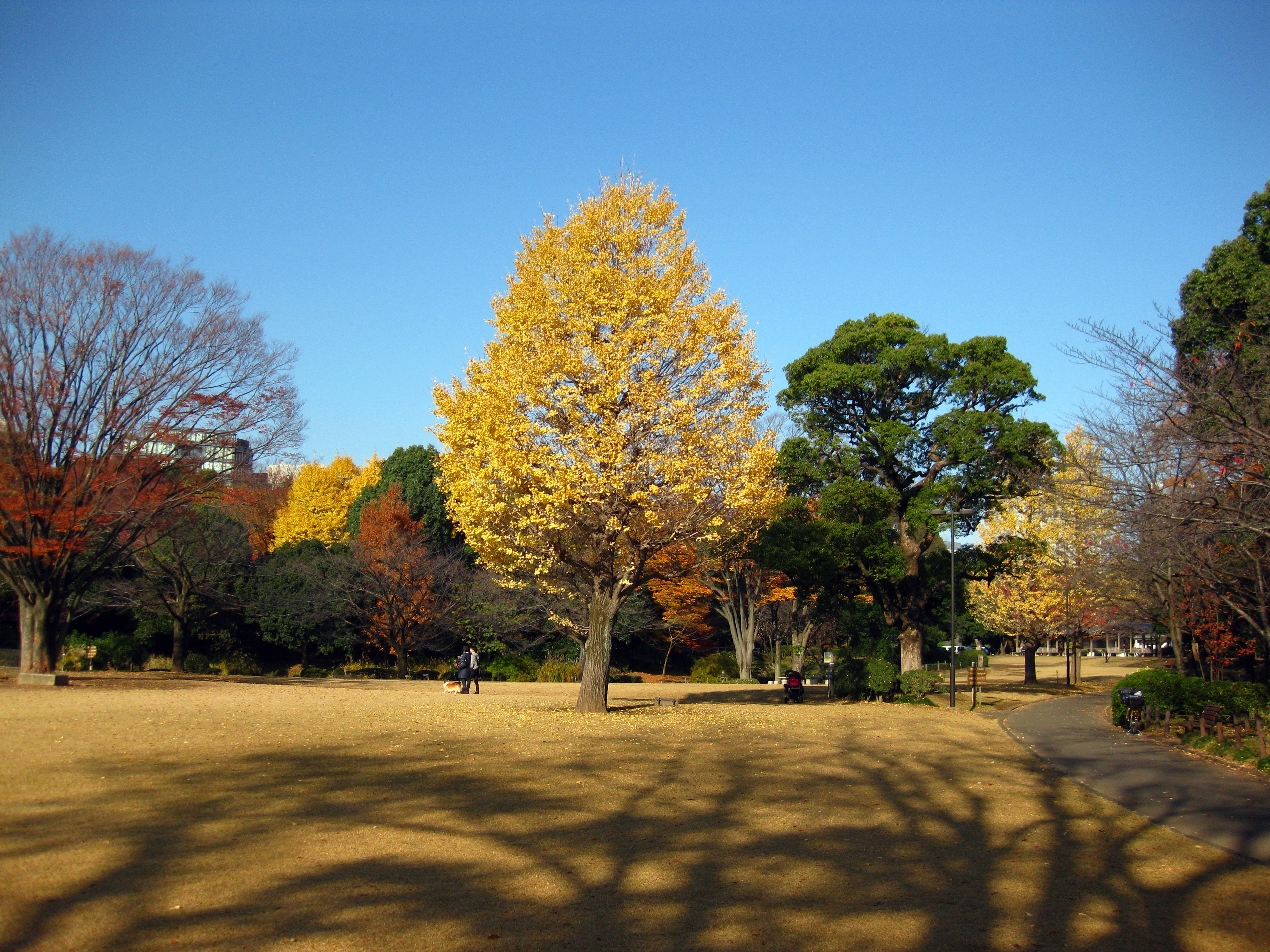
In terms of parks that truly matter to everyday life, the most useful are the Imperial Palace Outer Gardens and Wadakura Fountain Park.
It is remarkable that an area this dominated by business and commerce suddenly opens up into sky and green if you walk just a little.
That openness is one of the things that saves Tokyo Station life from becoming too suffocating.
If the perfectly arranged scenery of the Marunouchi side starts to tire you a little, the openness of the Imperial Palace grounds helps a lot.
Running, walking, taking a short break, clearing your head.
If you live around Tokyo Station, being able to use this green space changes the whole feeling of the area.
Cultural Facilities
Tokyo Station Gallery is one of the best cultural facilities for experiencing what makes Tokyo Station feel like Tokyo Station.
The history and structure of the station building itself sit very close to the experience of the museum.
Being able to touch culture as part of commuting or moving through the city is one of the quiet luxuries of this area.
The Tokyo Station Hotel, too, is more than just a luxury hotel. It offers the experience of staying inside a historic building.
The Tokyo Station area is not just convenient. It has a real thickness created by modern life being placed inside history.
That is one of the biggest things separating it from places like Shinjuku or Shibuya.
12 Disaster Risk
The most important disaster risk to think about around Tokyo Station is not building collapse, but being unable to get home.
Because it is such a huge terminal, large numbers of people can build up at once during earthquakes or major disruptions.
The moment trains stop, office workers, tourists, and business travelers all become stranded at the same time.
The underground routes that make everyday life so comfortable also make information management especially important in emergencies.
Which route gets you above ground, where to wait, how to use nearby plazas and evacuation points.
The more convenient a station is in daily life, the bigger the shock when it stops.
Tokyo Station is a perfect example of that.
In terms of fire risk, it does not have the same fear factor as dense wooden residential districts, but the density of people and the complexity of the underground spaces create their own problems.
As for flooding, the broader surrounding area still has some lowland characteristics of central Tokyo, so it cannot be called absolutely safe.
If you live here, you need to understand that the routes which feel convenient in normal times can become congestion routes in emergencies.
13 Advantages and Disadvantages
In the end, the appeal of Tokyo Station is overwhelming convenience, and its weakness is the thinness of everyday residential feeling.
Advantages
The first advantage is transportation strength.
Commuting, business trips, travel, and even getting home after dinner plans are all handled well here.
The freedom of movement is so high that life itself becomes easier to organize.
The second advantage is the sheer number of dining and shopping choices.
High-end restaurants, old established shops, B-class gourmet spots, station deli food, souvenirs, ramen, and character shops are all here.
The area has an extremely high ability to solve almost any practical need.
The third advantage is the scenery and air of the Marunouchi side.
Your route home feels a little special every day.
Being able to make that red-brick station building part of your ordinary scenery in the dead center of Tokyo is still a powerful thing.
Disadvantages
The first disadvantage is that, compared with the rent, the area does not offer much in terms of residential enjoyment.
You are paying for the location much more than for the home itself.
The second disadvantage is that it does not fit ordinary self-cooking life especially well.
It is convenient, yet weak in affordable supermarket culture.
Without noticing it, your food spending can drift upward very easily.
The third disadvantage is that the emotional temperature of the area is a little low.
It is organized and safe, but it is not the kind of place where you strongly feel neighborhood warmth or local familiarity.
If you live around Tokyo Station, you quickly realize that comfort and human warmth are not the same thing.
14 Who This Area Suits
Tokyo Station suits people who travel often for work, people who want to shorten their daily movement lines, people who enjoy eating out or relying on prepared food, and people who value the scenery and atmosphere of central Tokyo.
It does not suit people who want to build life around affordable supermarkets and home cooking, people who want a sense of neighborhood closeness, or people who want nights with a more human, messy warmth.
Tokyo Station is not a station that is kind to everyone.
But for the right person, it can raise the freedom of daily life all at once.
It is also a place that is brutally honest about the price of convenience.
15 Summary
Tokyo Station is often described as the face of Tokyo tourism, but from a living perspective its real character is more complex, sharper, and more interesting than that.
On the Marunouchi side, you have the 1914 station building, restoration work, dome decoration, and the thickness of a true historic structure.
On the Yaesu side, you have Yaechika, Tokyo Station First Avenue, Character Street, Tokyo Ramen Street, and Tokyo Ramen Yokocho, all creating a different kind of thickness made from consumption and circulation.
In other words, Tokyo Station is a station where both history and commerce exist in unusually concentrated form.
In the morning, it is a work station.
In the daytime, it is a station for moving around.
At night, it is a station for eating and heading home.
In spring, the openness of the Marunouchi side feels especially good. In summer, the underground routes become even more valuable. In autumn, the area becomes enjoyable to walk. In winter, the red-brick station building and illuminations become especially powerful.
The face of the area changes with the seasons, but one thing never changes: this is a place where people beginning something and people finishing something constantly cross paths.
If you live here, the feeling of being in the center of Tokyo is strong.
But at the same time, being in the center can make the outlines of daily life feel thinner.
For people who want to go all in on convenience, it is a very strong place.
For people who want more tactile everyday life, it can feel a little hard.
That complexity, including the fact that it is not simply “the best” in every way, is exactly what makes Tokyo Station such a Tokyo-like station.
Check nearby Yamanote Line stations
← Kanda Station Tokyo Living Guide | Tokyo Station | Yurakucho Station Tokyo Living Guide →