- In One Sentence
- 1 Basic Information
- 2 Neighborhood Character
- 3 Safety and the Feel of the Night
- 4 Rent Levels
- 5 Shopping Environment
- 6 Medical Access
- 7 Local Restaurants
- 8 Ramen
- 9 Train Line Character
- 10 Access to Major Areas
- 11 Shrines, Parks, and Cultural Spots
- 12 Disaster Risk
- 13 Advantages and Disadvantages
- 14 Who This Area Suits
- 15 Summary
In One Sentence
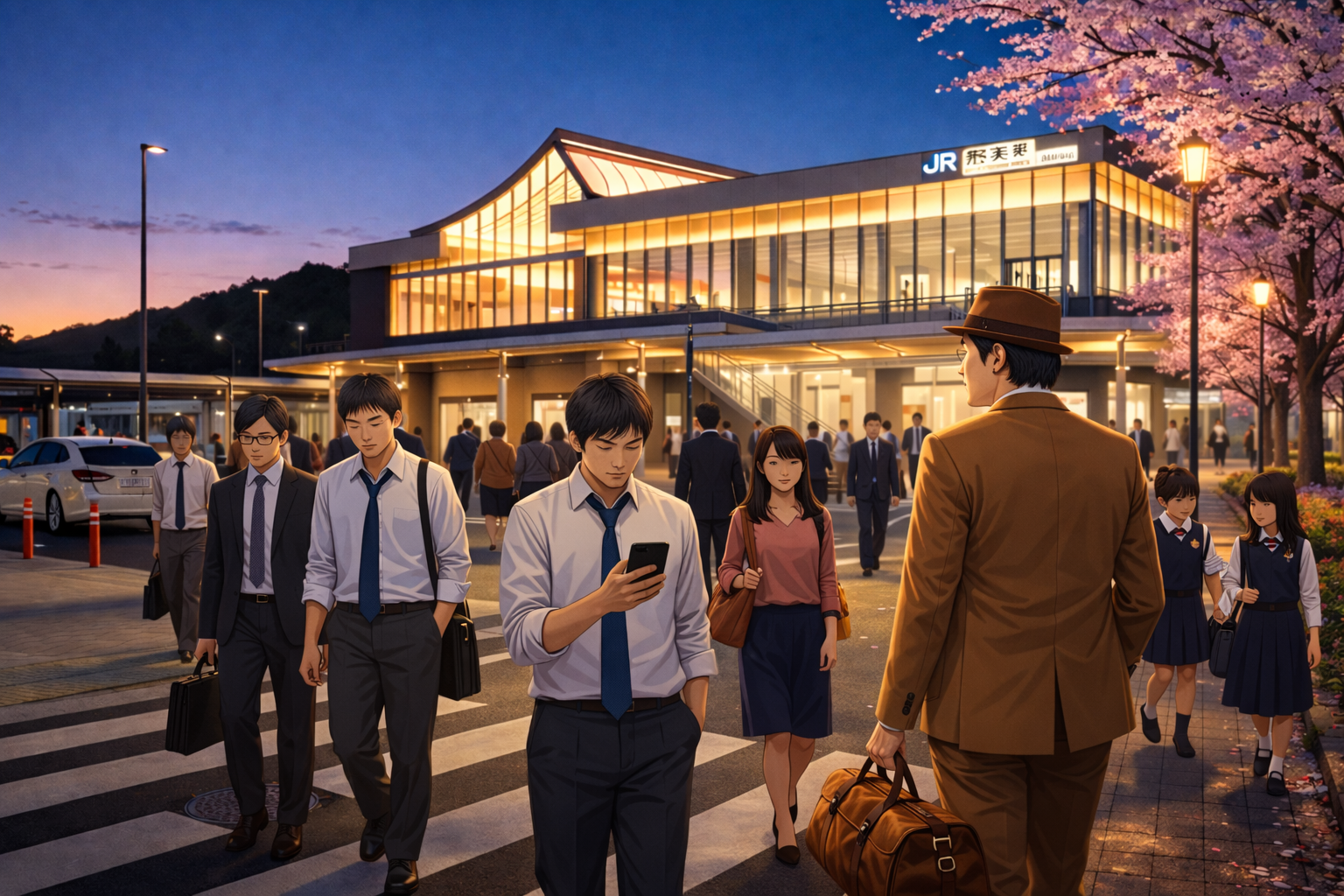
Musashi-Sakai Station is one of those Chuo Line stations where the framework of daily life is almost fully built right in front of the station. It does not push Kichijoji-style glamour or Mitaka-style starting-station strength to the front, but in exchange, shopping, eating, paperwork, reading, and going home do not scatter in every direction, and everyday life becomes strangely well organized. At night, the lights under the elevated tracks remain, while the nearby residential streets turn quietly calm, and that switch captures the character of this area with surprising accuracy.
1 Basic Information
Musashi-Sakai Station is a stop on the JR Chuo Line Rapid in Musashino City, and it also connects to the Seibu Tamagawa Line on the south side of the station. It stretches toward central Tokyo through the Chuo Line while also opening a route toward Fuchu, Tama, Shiraitodai, and Kyoteijo-mae through the Tamagawa Line. That gives it an unusual structure for a residential station in western Tokyo: it has both an axis that pulls you into the city center and another that opens sideways into a more local daily life.
The Seibu Tamagawa Line is a particularly distinctive route because it is separated from the rest of Seibu’s main rail network. That means Musashi-Sakai is not just a station that was made convenient in a modern sense. It is also a place where an older rail connection still leaves a visible mark on how the station functions today. You are living on the Chuo Line, but you also have a smaller, more local route attached to your daily map, and that gives the station more depth than it first appears to have.
In the morning, the station front carries both the flow of commuters heading into central Tokyo and the people transferring to the Tamagawa Line, but it does not feel like a terminal station on edge. Musashi-Sakai is a transfer station, but it is not a station that swallows you whole. There is still enough breathing room left for it to feel like a place people actually live around, not just pass through.
2 Neighborhood Character
The biggest strength of Musashi-Sakai is that the area around the station is dense without making the whole neighborhood feel noisy. On the north side, commercial facilities, supermarkets, administrative functions, and the shopping street create a practical everyday zone. On the south side, Musashino Place, shopping routes close to the station, quieter residential streets, and the atmosphere leading toward Kizuki Taisha create a softer side of the area. In simple terms, the north side is built for processing daily tasks, while the south side keeps more room to breathe.
When you step out of the station, there is still a decent amount of light and movement, but within a few minutes, the sound of ordinary life starts to overpower the station atmosphere. That quick transition is one of the real qualities of Musashi-Sakai. You can eat under the elevated tracks or near the station, then walk back to a quiet home without much delay. For people who want to live near convenience without being consumed by it, that balance works very well.
This is not the kind of station where the district itself becomes a destination like Kichijoji. It is also not a station defined mainly by transport power, like Mitaka with its starting trains and route branching. Instead, Musashi-Sakai is a place where you can finish shopping, use the library, have a light meal, and handle paperwork close to the station without daily life breaking into separate pieces. It does not have loud charm, but once you live here, the way everything stays gathered together starts to matter more than you expected.
There is also a moderate student presence around the area, including Asia University, which helps keep the neighborhood from becoming either an aging residential zone or a major entertainment district. It stays somewhere in between. There is youth here, but not enough to make it rough. There are people, but not enough to make it overwhelming. That balance is one reason Musashi-Sakai is a station people can stay with for a long time.
3 Safety and the Feel of the Night
Safety around Musashi-Sakai Station is better understood through where sound and people remain at night rather than through a simple safe-or-dangerous label. The station area has enough managed light and activity that it rarely feels deserted, but once you move a little farther away, it returns to the darker feel of an ordinary residential neighborhood. So the caution here is not the tension of a nightlife district. It is the more ordinary awareness that comes with walking home through housing streets.
There are restaurants under the elevated tracks and around the station, and the north side has places where people can casually stop for a drink, but this is not a station where the night becomes the main character the way it does in Shinjuku or Kichijoji. The night here functions more as the route home after dinner or a light drink than as a stage for disappearing into. That makes it weaker for people who want flashy nighttime energy, but very comfortable for people who want to turn themselves back toward home before the last train.
At night, the station gathers commuters heading back to the platforms, students returning from classes or cram school, and families finishing errands. That mix gives the area a kind of brightness that feels like an extension of ordinary life. The night in Musashi-Sakai is not a playground. It is more like a lighting system that helps your day land properly after work or a long list of errands.
4 Rent Levels
Musashi-Sakai is not the kind of place where you can casually assume that moving farther west on the Chuo Line will make rent cheap. That impression breaks down pretty quickly. The area carries the pricing logic of Musashino City and of the Chuo Line itself, so the feeling is closer to “not especially cheap for a quiet residential station.” If you come in expecting a bargain simply because it is not central Tokyo, the gap may feel larger than expected.
At the same time, the way rent feels changes a lot depending on walking distance, building age, and whether you are willing to use a bus. You can pay the full station-front premium, or you can step back slightly in exchange for more realistic numbers while still keeping the broader Musashino living environment. In other words, this is not a station where there is no room to adjust, but the closer you stay to the polished convenience of the station area, the more clearly the rent reflects it.
The important question here is what you get back for the cost. Musashi-Sakai is not a place where you recover the rent through image or prestige. You recover it through how little daily life scatters. When daily shopping, food, paperwork, books, and light eating out can all be handled around the station, the people who benefit most are the ones with busy schedules or a strong desire to protect their time at home. For people who barely use the station area’s convenience, the rent can easily feel a little too high.
5 Shopping Environment
Shopping is one of Musashi-Sakai’s strongest everyday advantages. Supermarkets and daily-goods options cluster around the station in a way that lets you complete a surprising amount of life on the way home. That is not just a matter of having stores nearby. It means you can say, “I’ll cook tonight,” or “I’ll just pick up prepared food,” without adding a second trip across town. The structure of the station area makes those decisions lighter.
Another good point is that the flow of people carrying groceries naturally spreads between the north and south sides, so the station area does not feel like it all collapses into one overloaded point. When a neighborhood depends too heavily on a single store, your life ends up controlled by that store’s crowding and pricing. Musashi-Sakai avoids that feeling. Whether you live alone or with a family, the range of options is enough to be useful without being so broad that daily life turns into endless comparison and decision fatigue.
What makes the area even stronger is that it does not stop at consumption. Musashino Place sits right by the south side of the station and combines library functions, learning space, civic activity, and youth support in one dense facility. That means “borrowing books,” “studying,” “bringing children somewhere meaningful,” and “stopping in somewhere quiet for a moment” all become possible within the station area. Plenty of stations are convenient for buying things. Far fewer are convenient for restoring the quality of your daily life.
6 Medical Access
In medical terms, Musashi-Sakai benefits from both nearby clinics and access to larger hospital functions within the broader living area. That creates a structure where everyday problems can be handled quickly while more serious issues do not immediately push you into uncertainty. Compared with neighborhoods where you only have a few small local clinics and little else, the floor of daily life feels more secure here.
There are various clinics around the station, so the first response to a minor health problem is usually not difficult. For foreign residents, though, simply having hospitals nearby is not enough by itself. Musashino City also has consultation services for foreign residents, telephone interpretation support through city offices, and multilingual support channels, which reduce the overall stress of living here. Still, that does not mean every clinic works smoothly in English from the start, so the language barrier may remain at the stage of booking appointments or filling out medical forms.
When certificates, consultation, daily shopping, and links to larger medical support can all be reached within the same general station area, the result is not just convenience. It is a neighborhood where you are less likely to panic when life goes slightly wrong. Musashi-Sakai is one of those places where the difference shows up not only on good days, but especially on tired or difficult ones.
7 Local Restaurants
Eating out in Musashi-Sakai is not about the grand scale of a huge food district. Its strength is that you can find places that fit your ordinary self. Rather than filling the station area with chains, the neighborhood still has enough individual restaurants within a few minutes of the station to let you switch between eating alone, having a light meal with someone, or choosing a slightly more careful dinner.
COCKTAIL HAMBURGERS
Genre: Hamburger
Price range: around ¥1,000–¥2,000 for lunch / around ¥2,000–¥3,000 for dinner
Google Search URL:
https://www.google.com/search?q=COCKTAIL+HAMBURGERS+Musashi-Sakai
This is a strong station-area option because it gives you a distinctive burger that does not feel like a chain-store experience, right on an ordinary Musashi-Sakai daily route. It works less as a place you make a special trip for and more as a place that lifts your mood slightly on the way home from work or after errands.
Sakanaya Ao
Genre: Seafood / Japanese cuisine
Price range: around ¥4,000–¥6,000 for dinner
Google Search URL:
https://www.google.com/search?q=Sakanaya+Ao+Musashi-Sakai
This is the kind of place that works when you want a quieter, more settled meal in Musashi-Sakai. It is close to the station, but it does not lean on momentum or noise. It lets you end the evening with fish and calm conversation, which makes it useful for seeing friends or for nights when you want something better than routine without going out into a louder district.
Ajinomise Inakappe
Genre: Izakaya / home-style Japanese food
Price range: around ¥3,000–¥5,000 for dinner
Google Search URL:
https://www.google.com/search?q=Ajinomise+Inakappe+Musashi-Sakai
This is not the kind of place tourists discover easily, and that is part of why it matters. Its value lies more in feeling like a local restaurant that has continued for good reasons than in any flashy reputation. Rather than being an intimidating regulars-only institution, it feels more like the kind of neighborhood place you naturally come to know after living here for a while.
Eating out in Musashi-Sakai is less about a social-media-friendly food district and more about having several different “night temperatures” within a few minutes of the station. That makes restaurant use less likely to feel like breaking your budget carelessly if you live alone, and easier to fit into family life as a way of settling down before going home.
8 Ramen
Ramen in Musashi-Sakai has more individuality than you might expect from a station this practical. It is not just about famous names. The better part is that these shops can be folded naturally into daily routes: stopping by on the way home, going out for a bowl on a day off, or using one as the final stop after drinks. You do not need to fall back on chain stores to build a normal ramen routine here.
Chinchintei
Genre: Abura soba / Chinese-style noodles
Price range: around ¥1,000
Google Search URL:
https://www.google.com/search?q=Chinchintei+Musashi-Sakai
This is a hard shop to ignore when talking about abura soba in the Musashino area. But what matters here is not just its reputation or history. It works well with station life. It feels like the kind of place that becomes part of your normal routine if you live in Musashi-Sakai, not just a local specialty you try once.
Tokyo Miso Ramen Uzura
Genre: Miso ramen
Price range: around ¥1,000–¥1,500
Google Search URL:
https://www.google.com/search?q=Tokyo+Miso+Ramen+Uzura+Musashi-Sakai
This is a strong option on the north side when you want a real bowl of ramen and not just a quick way to fill up. Because the shop has a clear identity, it works well on nights when you want dinner to feel satisfying rather than merely efficient. In a station area filled with useful daily stores, that kind of deliberate bowl adds value.
Maruko
Genre: Chinese-style ramen
Price range: around ¥1,000
Google Search URL:
https://www.google.com/search?q=Maruko+Musashi-Sakai
This is a good example of a shop that stays strong because it fits daily life. It is close to the station, easy to stop at on the way home, and does not need to become an “event” ramen outing. Musashi-Sakai’s ramen quality shows up partly in this ability to become habit.
Shina Soba Aoba
Genre: Shina soba
Price range: around ¥1,000–¥1,500
Google Search URL:
https://www.google.com/search?q=Shina+Soba+Aoba+Musashi-Sakai
This one is not right in the center of the station front, but it works once you widen your life slightly beyond the immediate station zone. That matters because Musashi-Sakai becomes more interesting once your living range expands a little. It is the kind of shop that gives you a reason to step outside after spending too much of a day at home.
9 Train Line Character
If you describe Musashi-Sakai’s transport simply by saying, “The Chuo Line is available,” you miss the real shape of the station. What defines this place is the coexistence of the straightforward convenience of the Chuo Line Rapid and the local character of the Seibu Tamagawa Line. The Chuo Line sends you straight toward the city center. The Tamagawa Line opens a different life route toward Fuchu, Shiraitodai, and Koremasa. That means the main commuting axis is simple, but family movement and weekend movement do not stay locked into a single direction.
The orange trains coming into the platform may all look like the same Chuo Line, but the actual use is not identical across the board. Musashi-Sakai is served by the Chuo Line Rapid, but faster service patterns such as Chuo Special Rapid and Commuter Special Rapid can pass through. So if you live here assuming every orange train will stop at your station, sooner or later you get caught by a small but annoying miss when you are in a hurry. This is one of those things you learn in your body once you start living on the Chuo Line.
As you move east on the line, the division of roles between rapid and local service starts to affect daily life even more. In particular, Koenji, Asagaya, and Nishi-Ogikubo have the well-known weekend rule where rapid trains pass through. So living in Musashi-Sakai gradually trains you not only to think “I can get to Shinjuku directly,” but also to judge whether today is a rapid-train day or a day that requires local service or a transfer. The Chuo Line is convenient, but the convenience comes with small operational rules inside it.
The Seibu Tamagawa Line is almost the opposite. Its role is simpler and easier to understand. It shifts you out of the Chuo Line’s speed and into a calmer, more local rhythm. It works not as a fast intercity line, but as regional everyday transport. That local feel matters because it prevents Musashi-Sakai from becoming only a city-commuter station. It gives the station another layer of life.
On top of that, the Chuo Line Rapid now offers Green Car seating as an option, which changes the picture slightly for people with longer commutes. Musashi-Sakai does not have Mitaka’s starting-train advantage, but it now has a clearer way to keep commuting from becoming pure endurance. That small margin matters over time.
10 Access to Major Areas
In terms of nighttime access, Musashi-Sakai is a station where both the last train and taxis can be built into life without feeling impossible. Because it can point both toward central Tokyo and toward the western side of the city, it is relatively hard to end up completely stranded after work or a night out. Last-train times change with timetable revisions and day type, so the times below should be read only as rough guides.
For Shinjuku, the last-train feeling is roughly around the early part of the 12 a.m. hour. By taxi, late-night fares tend to fall somewhere in the ¥6,000 range.
For Tokyo Station, the last-train feeling is roughly around the early to middle part of the 12 a.m. hour. A taxi back from central Tokyo is possible, but not something you would normally treat as a casual option, so this route is better understood as a train-based connection.
For Kichijoji, the distance is only a few minutes by train, so people usually do not experience it as a station where they need to think anxiously about the last train. The taxi distance is short enough that nights there remain easy to absorb.
For Tachikawa, the last-train feeling is roughly around the later part of the 12 a.m. hour. The western side remains quite usable from Musashi-Sakai, which is one reason the station works well not only for central Tokyo but also for life in western Tokyo.
The real strength of this access profile depends on how you use it. Of course it works for people who go to Shinjuku or Tokyo every day. But it becomes especially strong for people who want to choose destinations based on the weight of the day. When Kichijoji, Tachikawa, and central Tokyo can all sit on the same practical map, the station starts to feel stronger than its quiet image suggests.
11 Shrines, Parks, and Cultural Spots
Shrine


If you live in Musashi-Sakai, it matters that there is not only convenience around the station, but also a place within walking distance where you can let go of the day a little. Kizuki Taisha on the south side is less a sightseeing shrine than a place that receives ordinary life at its turning points. It works not only for New Year visits or blessings, but also as a place you can step into when you want to lower your breathing after the brightness of the station area. Because it does not depend on spectacle, it becomes more valuable after you live here.
The important thing is that the sound of the city thins out properly only a few minutes from the station. When a place like that exists nearby, Musashi-Sakai’s convenience stops being just about density of consumption and starts including room to reset yourself.
Park
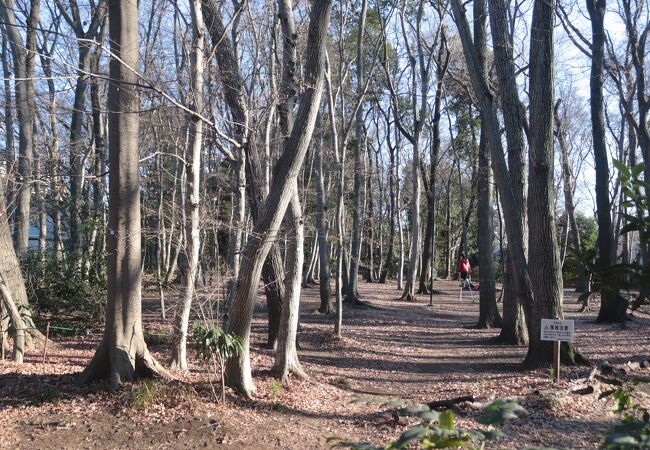

As for parks and greenery, Sakaiyama-no Ryokuchi feels very much like Musashi-Sakai. It is not the kind of large, heavily managed park that becomes an event space. It feels more like greenery on the extension of daily life. In a neighborhood this convenient around the station, the meaning of nearby green space becomes bigger. Green does not need to be a destination. It works better as a place where you can cool your head down. In that sense, the parks here are highly suited to actual living. Small neighborhood parks also support family walks and children’s outdoor time.
Cultural Spots
Musashino Place is, unsurprisingly, the cultural anchor here. Right by the south side of the station, it combines a library with study functions, civic activity space, and youth support. That makes it useful not only for people who like books, but also for remote workers who need a mental reset, families who want a meaningful place to spend time, and anyone who needs a quiet base within the station area. Musashi-Sakai does not build its identity through flashy attractions. It builds depth through facilities like this that support ordinary life well.
12 Disaster Risk
It would be too simplistic to assume that Musashi-Sakai is simply safe because it sits on higher ground in western Tokyo. The real risk picture is quieter than that. The things worth paying attention to here are localized flooding from heavy rain, the spread of fire in residential zones, and how easily you can move through narrow neighborhood streets after an earthquake. In other words, the issue is less about dramatic, large-scale disaster imagery and more about how well you understand the weak points built into ordinary life.
One of the traps in this kind of station area is that the brightness and order around the station make people too relaxed in heavy rain. Urban flooding can still happen, so first-floor apartments, half-basement storage, bicycle parking, and the route you use to get home all deserve attention when weather turns severe. Musashi-Sakai is the kind of place where calm normal days can make it easy to miss the weakness of bad-weather days.
If you watch how water moves through a residential side street near the station during heavy rain, you start to understand the area more honestly. Anyone living here would be wise to learn not just where life is convenient on clear days, but which streets remain easiest to walk on during extreme weather.
Fire risk also needs to be read carefully. The well-organized station front should not make you assume the whole district is equally easy in an emergency. A little farther away, low-rise residential areas remain, and some streets are narrow enough that falling objects or fire spread could affect actual evacuation movement. In Musashi-Sakai, more than in a high-rise district, the important things are the width of the roads around your home, nearby evacuation space, and the direction you can realistically escape on foot.
Because the station area is so convenient, it is easy to build life around the station itself. But in a disaster, the real battleground is usually around your home, not the station front. The more convenient a station is, the more important it becomes to check hazard conditions and evacuation routes before choosing where to live.
13 Advantages and Disadvantages
The first advantage of Musashi-Sakai is that the structure of daily life gathers neatly around the station. Supermarkets, commercial facilities, library functions, administrative services, and consultation access are all placed within a short range. That makes it easier to divide and finish tasks even on workdays, which in turn makes it less likely that weekends disappear into chores you could not handle earlier. This is a benefit that grows more valuable the busier your life becomes.
The second advantage is the two-sided rail structure of the Chuo Line and the Seibu Tamagawa Line. You keep a strong commuting axis toward central Tokyo while also gaining an independent local axis. That makes daily life less dependent on one single city-center direction. Weekend movement toward places like Fuchu, or family errands toward Tama and Shiraitodai, become easier to imagine once you live here. It is the kind of strength you do not fully understand from the route map alone.
The third advantage is the temperature of the neighborhood. Student presence and restaurant lights are there, but the station never gets pulled into nighttime intensity the way a large entertainment district does. That makes it easier to live at the edge of activity while still turning your mind back toward home. For people who want access to the city without giving up a settled residential rhythm, this balance works very well.
The first disadvantage is that rent is higher than the station’s modest image suggests. Because the quality of the station area and the value of Musashino City land are built into the market, people who prioritize low fixed costs above everything else can easily feel squeezed here. If you want Chuo Line living at the lowest possible monthly cost, you often need to compromise on distance from the station or building age.
The second disadvantage is that the neighborhood is not an entertainment machine. Unlike Kichijoji, this is not a place where simply stepping outside automatically gives you stimulation. That means people who always want novelty near home may find it too quiet. Seen positively, it is calm. Seen negatively, it may feel slightly lacking in punch.
The third disadvantage is that if you treat the Chuo Line’s operating patterns too casually, small inconveniences will accumulate. Musashi-Sakai is a rapid-service stop, but special rapid trains can pass through, and the eastern side of the line brings its own weekend skip rules. For people unfamiliar with the Chuo Line, there will be days when travel does not turn out to be as single-seat and straightforward as expected.
14 Who This Area Suits
Musashi-Sakai suits people who want to live on the Chuo Line but feel tired by districts with too much self-assertion. They do not need Kichijoji-level crowds, but they also do not want a residential neighborhood that is too empty, too dark, or too extreme. For people in that middle zone, Musashi-Sakai balances station-front convenience and residential calm in a very usable way.
It also suits dual-income households and people with irregular work schedules. When groceries can be bought on the way home, light meals can be folded into the station area, and administrative or library functions can be handled nearby on another day, life becomes less likely to fall apart. This is the kind of station that rewards busy people by keeping daily structure intact.
Foreign residents can also fit here well, especially those willing to build a normal life in Japanese rather than expecting an English-only environment. The concentration of daily-life functions around the station and the ability to connect to consultation support reduce the psychological load of starting life in Tokyo. At the same time, this is not a tourist district, and the operating language of ordinary life remains Japanese. So it suits people who want to live in Japan as Japan, not people who want everything to work smoothly in English from the beginning.
On the other hand, Musashi-Sakai is less suitable for single residents who prioritize the lowest possible rent, for people who want strong stimulation every night, and for anyone unwilling to deal with the smaller operating differences built into the Chuo Line. This is not a glamorous answer for everyone. It is a station that improves the precision of daily life, so if that is not something you value, the appeal will be harder to feel.
15 Summary
Musashi-Sakai is not one of the Chuo Line stations that immediately stands out. But for people who want to organize the framework of daily life cleanly, it is a very strong station. The practical north side, the calmer south side, Chuo Line access into central Tokyo, the local character of the Seibu Tamagawa Line, Musashino Place, and the density of station-front errands all work together to create a life that does not scatter needlessly.
In the morning, you join the Chuo Line flow toward the city and, when needed, build in small tricks to make the commute easier. During the day, the station-area facilities and shopping routes keep life’s tasks from spreading too far. At night, you can eat a little around the station or under the elevated tracks, then return to a neighborhood that settles properly once you enter the residential streets. On weekends, you can escape into shrines, greenery, and library space while still being able to stretch toward Kichijoji, Tachikawa, or Shinjuku if you want. That ability to stay neither too closed nor too pulled open is what supports everyday life in Musashi-Sakai.
Once you pass from the station lights into a side street and the sound changes quickly from city noise to ordinary life, you begin to understand that Musashi-Sakai is not just a plain station with nothing happening. It is a station that does not add unnecessary fatigue to your life. In spring and early summer, the greenery becomes more meaningful. In the heavy rains of midsummer, you become more aware of drainage routes and street behavior. In winter, the dry air makes the convenience of the station area feel even more valuable. This is not a place with showy seasonal faces, but it is a place where the way to organize life becomes clear in every season.
Still, Musashi-Sakai is not the right answer for everyone. People who want strong stimulation every night, people who need rent to be the top priority, and people who do not want to think about the Chuo Line’s smaller service differences may not connect with this station’s appeal. But for people who want denser everyday life, shorter living routes, and a balance between station-front convenience and the breathing space of a residential area, Musashi-Sakai is a station they can stay with for a very long time. It is not a place that wins through flash. It is a place that remains because daily life works better there.