- In One Sentence
- 1 Basic Information
- 2 Neighborhood Character
- 3 Safety and the Feel of the Night
- 4 Rent Levels
- 5 Shopping Environment
- 6 Medical Access
- 7 Local Restaurants
- 8 Ramen
- 9 Train Line Character
- 10 Access to Major Areas
- 11 Shrines, Parks, and Cultural Spots
- 12 Disaster Risk
- 13 Advantages and Disadvantages
- 14 Who This Area Suits
- 15 Summary
In One Sentence
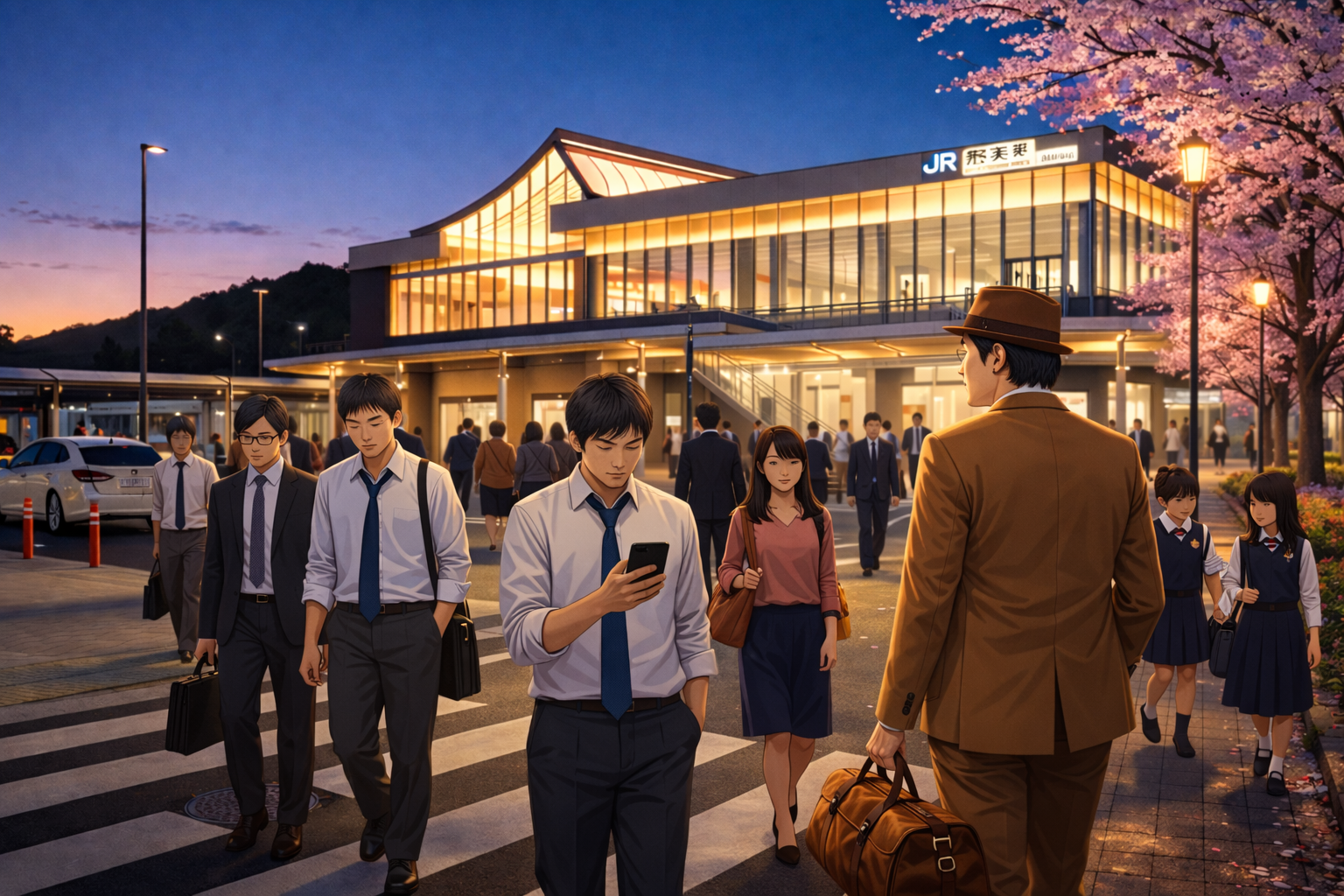
Higashi-Koganei is not a station with “nothing there.” It is a station where extra things have not been allowed to grow too far. You still get strong Chuo Line access into central Tokyo, but the station area does not swell into something heavy or overbuilt, so the outline of daily life stays calm. At night, the lights around the station remain, but just a short walk away the air turns residential, and that shift makes it clear that this is not only a place for commuting. It is a place for actually living.
1 Basic Information
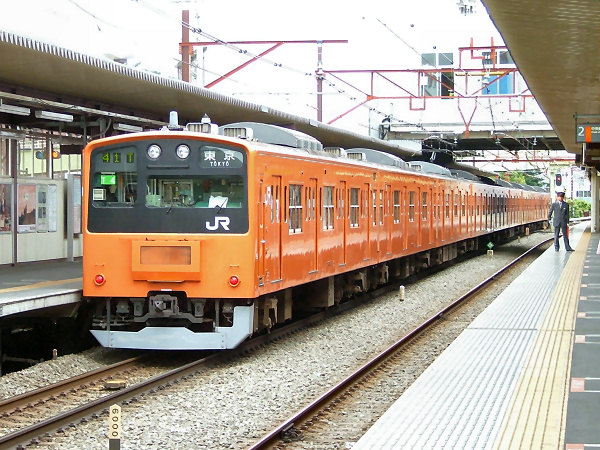

Higashi-Koganei Station is a stop on the JR Chuo Line Rapid, located between Musashi-Sakai and Musashi-Koganei. Because rapid trains stop here, access to major areas such as Shinjuku and Tokyo is strong. At the same time, it is not a major transfer hub, so people do not pile up around the station to the same degree as they do at bigger stations. That structure allows it to keep the breathing room of a residential station while still benefiting from the Chuo Line’s convenience.
When you actually walk around the station area, you notice that the pressure level is relatively low for a Chuo Line stop. There are of course commuters in the morning, but the atmosphere does not feel as packed or aggressive as it does at larger stations closer to central Tokyo. The platforms and ticket gates move quickly without becoming chaotic. Higashi-Koganei is a station that lets you ride the Chuo Line properly without being swallowed by the Chuo Line’s intensity.
2 Neighborhood Character
The key feature of Higashi-Koganei is that the station area has not expanded more than necessary. There are station-adjacent functions such as nonowa Higashi-Koganei and enough daily shopping support to keep life moving, but the area has not turned into a massive commercial zone. Because of that, you do not get the feeling that the entire neighborhood is constantly pushing itself at you on your way home. The convenience near the station and the quiet of the residential streets connect in a relatively clean, natural way.
As you walk around, both the north and south sides feel like they stop at “enough.” There are not many flashy attractions, and the range of shopping and dining options is not as broad as Kichijoji or Musashi-Koganei. But that does not simply become a weakness. It reduces the number of decisions daily life demands from you. Higashi-Koganei is the kind of station where you are more likely to use the town efficiently than to be distracted by it.
Part of what makes the area interesting is what that plainness is made of. It is close to the Koganei campus of Tokyo University of Agriculture and Technology and to Hosei University’s Koganei area, so there is a student presence, but not enough for the entire neighborhood to turn into a full student district. The result is a place with some youth in the air but without the whole area shifting into noise or disorder. Higashi-Koganei is neither just a quiet residential station nor fully a student town. It creates livability in the middle ground between those two.
3 Safety and the Feel of the Night
At night, Higashi-Koganei returns to ordinary residential time quite quickly. There are still restaurants open and people making their way home near the station, but the area does not keep stretching deeper into the night the way a major entertainment district would. As the hour gets later, the density of people drops in a straightforward way, and the calm of the residential streets becomes stronger than the brightness of the station area.
For residents, that makes the night feel relatively easy to read. There is less stress from having to pass through nightlife crowds on the way home, and the chances of being pulled into noise or late-night trouble are lower than at larger stations. At the same time, once you leave the station area and enter the residential streets, you are in an ordinary neighborhood at night, so the mindset shifts from “busy area caution” to “quiet street caution.” The night in Higashi-Koganei is not a night for disappearing into. It is a night that lets the day land quietly.
4 Rent Levels
Higashi-Koganei is not an especially cheap station just because it sits along the Chuo Line a little farther west. But it also does not carry the same kind of premium as stations whose identities depend on dense station-front functions or stronger name recognition. For people who want to live on the Chuo Line without paying for a louder or more commercially intense station area, the pricing can feel more realistic here.
The way to justify rent in Higashi-Koganei is not through brand value but through the simplicity of daily life. Access into central Tokyo is strong, the station area can handle the basics, and the neighborhood does not constantly tempt you into extra spending or detours. In that sense, Higashi-Koganei is less a station that wins through low rent and more a station that keeps overall life lighter by reducing unnecessary movement and waste.
5 Shopping Environment
Shopping is both a weakness and a strength here. The station area can cover daily essentials, and the presence of nonowa Higashi-Koganei helps build a route where you can take care of light errands on the way home. But this is not a station where all shopping ambitions are satisfied in one place. On days when you want to enjoy shopping or buy more heavily, it is natural to widen your range to stations like Musashi-Koganei or Kichijoji.
Seen the right way, that two-layer system works well. Everyday life stays local and light in Higashi-Koganei, while heavier shopping and mood changes can be handled elsewhere. Because the area does not try to contain everything, it avoids becoming too bloated, and the daily atmosphere stays quieter. Higashi-Koganei is not a shopping destination, but it is a strong station for shopping that does not break the shape of your daily life.
6 Medical Access
In terms of medical access, the practical approach in Higashi-Koganei is to use local clinics for everyday first response and then rely on larger medical options toward areas such as Musashi-Koganei or Mitaka when necessary. This is not a station that concentrates major hospital-level functions in one tight zone, but it does provide enough for ordinary life while staying well positioned within a broader living area.
That structure becomes more meaningful after you live here for a while. Everything is not directly in front of the station, but neither is there a dangerous blank space in everyday support. Higashi-Koganei is not a station that advertises medical strength, but it does have enough daily resilience, and what it lacks can be complemented fairly easily by nearby stations and surrounding districts.
7 Local Restaurants
Eating out in Higashi-Koganei is less about a large food district and more about having several solid places that fit naturally into ordinary life. The station area is not huge, but that actually helps. The restaurants that matter here are easier to connect to real patterns of use: lunch, a stop on the way home from work, or a slightly more satisfying meal on a day when home cooking feels too flat.
Dandelion
Genre: Western-style food / hamburg steak
Price range: around ¥1,000–¥2,000
Google Search URL:
https://www.google.com/search?q=だんでぃらいおん+東小金井
About a six-minute walk from the north side, this is the kind of small Western-style restaurant that feels properly local. Because it sits slightly away from the busiest station-front flow, it works well when you want to turn a day off lunch into a slightly more meaningful block of time. It matches Higashi-Koganei’s everyday temperature better than a flashy “destination” restaurant would.
Houka
Genre: Chinese food / abura soba / casual set meals
Price range: around ¥1,000
Google Search URL:
https://www.google.com/search?q=宝華+東小金井
About a one-minute walk from the south side, this is one of the stations’ most important everyday anchors. The well-known abura soba matters, but what matters more from a living perspective is that there is a station-near place you can genuinely make part of your routine. It is less about trying a famous bowl once and more about becoming the kind of place you say yes to repeatedly once you live nearby.
Takeshi
Genre: Izakaya / creative Japanese food
Price range: around ¥3,000–¥5,000
Google Search URL:
https://www.google.com/search?q=岳志+東小金井
About a five-minute walk from the station, this works well on nights when going out to a bigger area feels excessive but staying home feels slightly disappointing. The mood leans more toward local, settled eating and drinking than toward big-road excitement, which suits Higashi-Koganei’s calm, everyday night atmosphere.
The strength of dining in Higashi-Koganei is not quantity. It is that the restaurants here tend to make sense as part of a life route. A place for one person, a place that does not feel too heavy for lunch or dinner, a place that matches the mood of the station area. That kind of practical fit is what makes the food scene work.
8 Ramen
Ramen in Higashi-Koganei shows the area’s everyday character especially well. It is not a giant battleground, but it is easy for residents to build personal favorites here. The important quality is not “worth traveling for” so much as “easy to fold into life.” A bowl on the way home, a place to finish the evening, a regular option without too much fuss. That is where the strength lies.
Houka
Genre: Abura soba / Chinese noodles
Price range: around ¥1,000
Google Search URL:
https://www.google.com/search?q=宝華+東小金井
This is the obvious first ramen anchor in Higashi-Koganei. It is close to the station, easy to turn into a habit, and highly compatible with daily life. Its recognition is real, but the stronger point is that it does not stay trapped in “local specialty” territory. It becomes part of the actual noodle routine of people who live nearby.
Kujira Shokudo nonowa Higashi-Koganei
Genre: Soy sauce ramen
Price range: around ¥1,000–¥1,500
Google Search URL:
https://www.google.com/search?q=くじら食堂+nonowa東小金井店
Because it sits within the station-adjacent nonowa area, this is especially strong as a bowl that does not force you to break your route home. Higashi-Koganei ramen works best when it does not demand an outing. This is the kind of shop that lets you eat well without turning dinner into a project.
It is actually a plus that the choices are not overwhelming. There is enough strength to avoid feeling weak, but not so much that every bowl turns into a debate. In Higashi-Koganei, ramen makes the most sense when judged by how well it fits into everyday life.
9 Train Line Character
If you had to sum up the train-line character of Higashi-Koganei in one sentence, it would be this: you get real Chuo Line convenience here, but you also need to learn the Chuo Line’s small rules properly. Rapid trains stop here, so access into central Tokyo is strong, but some faster service patterns such as Chuo Special Rapid pass through. Even though the trains are all orange, they do not all play the same role, and living here means learning that in practical, everyday terms.
As you move farther east, the Chuo Line becomes even less simple than “rapid trains are always best.” Koenji, Asagaya, and Nishi-Ogikubo have the well-known weekend rule where rapid trains pass through. So life in Higashi-Koganei gives you the strength of direct rapid access while also gradually teaching you to judge whether today is a rapid-train day or a day that might call for local service or a transfer. This is a convenient station within the Chuo Line system, but it is still part of a line where small operational differences matter.
10 Access to Major Areas
From Higashi-Koganei, Shinjuku is roughly around 20 minutes, Tokyo around 35 minutes, Kichijoji under 10 minutes, and Tachikawa around 20 minutes. Within the Chuo Line, that means you are not especially far from central Tokyo, but you also do not live under the direct pressure of a major terminal area. This station has a balance where commuting is fully realistic, but daily life does not collapse into being only about the commute.
Last trains vary by direction, but as a general feeling, thinking in terms of around midnight keeps you roughly in the right zone. Taxi use is also still relatively realistic within this band of the Chuo Line, and movement among nearby stations such as Kichijoji, Musashi-Koganei, and Mitaka remains fairly light. Higashi-Koganei does not contain everything by itself, but it sits in a position that allows strong neighboring stations to be used without much strain.
11 Shrines, Parks, and Cultural Spots
Shrine
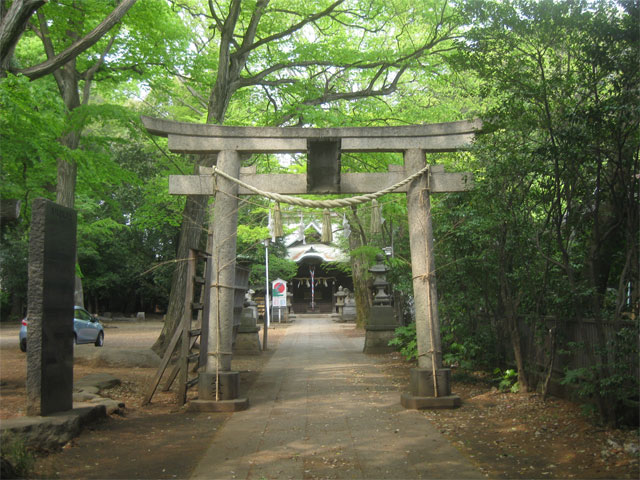
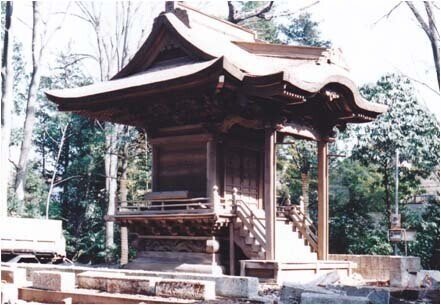
If you are thinking about shrines within the Higashi-Koganei living area, Koganei Shrine is a strong choice. It is not the kind of place pushed heavily as a tourist attraction. Instead, it functions more like a local center of gravity that can be reached as part of ordinary life. When a place like that exists nearby, you do not have to judge the value of the neighborhood only by the station-front practicality.
Because Higashi-Koganei’s station area is not oversized, the meaning of a quiet place like this becomes stronger. It is less a shrine for display and more a shrine that helps slow the speed of everyday life down. Just having a place nearby where you can reset changes the quality of a residential station quite a bit.
Park

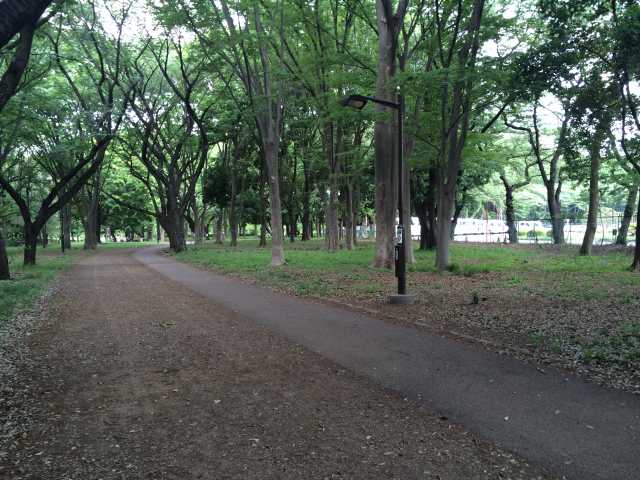
For parks, Musashino Park is a major strength of this area. It is not attached directly to the station front, but its open grassland, wooded sections, and the presence of the Nogawa River corridor bring a real sense of space into the broader living range. The contrast between Higashi-Koganei’s compact station area and the openness of this park is one of the things that makes life here feel good.
If you live in Higashi-Koganei, it makes more sense to use this kind of green space as part of daily life than to depend only on convenience. Walking, resetting, taking children out, or doing absolutely nothing for a while: the real value of Musashino Park is not that it is an “event park,” but that it gives pressure from daily life somewhere to escape.
Cultural Spots
Higashi-Koganei is not a station where huge cultural facilities dominate the station area, but the atmosphere is shaped by universities, shopping street events, and local activities such as the Higako Summer Festival around the south-side shopping street. This is not a station that builds its cultural feeling through giant institutions. It builds it through smaller gatherings, mixed age layers, and everyday local energy.
12 Disaster Risk
Higashi-Koganei does not carry the same large flood image as lower-lying eastern Tokyo, but that does not mean it can be treated as fully safe by default. The realistic risks are more local: road flooding during intense rain, evacuation difficulty on narrow residential streets, and fire spread in areas where older housing remains. In other words, this is less a station vulnerable to dramatic large-scale disaster imagery and more a station where smaller weaknesses in ordinary life are easy to overlook.
That kind of calm neighborhood creates its own trap. Because the area feels relatively orderly and stable most of the time, people can delay learning how water moves during heavy rain or which directions remain easiest to escape on foot if something goes wrong. If you live in Higashi-Koganei, it is worth learning not only which streets feel comfortable on clear days, but which areas become weak in bad weather.
13 Advantages and Disadvantages
The first advantage of Higashi-Koganei is that it receives real Chuo Line convenience without raising the pressure level around the station too far. Rapid trains stop here, and major destinations such as Shinjuku and Tokyo are easy to reach, yet the station area itself has not grown into something too heavy. That balance becomes more valuable the more often you use it.
The second advantage is the low level of decision fatigue in daily life. Shopping and eating out both stop at “enough, but not excessive,” so you are not constantly hit with too much information every time you step outside. For people who want to keep life organized over the long term, that scale can actually be ideal.
The third advantage is the air created by the parks and universities nearby. There is some student presence, and there are meaningful ways to escape into green space. That keeps the station from becoming only a quiet residential point. It feels a little younger than a purely sleepy neighborhood, but far calmer than a full student district.
The first disadvantage is that the area lacks strong glamour. This is not a station like Kichijoji where simply stepping outside can raise your mood through density and stimulation. If you want constant novelty close to home, Higashi-Koganei can feel too plain.
The second disadvantage is that it is harder to complete absolutely everything in one station area. Daily life works fine, but heavier shopping, stronger medical specialization, and broader entertainment naturally pull you toward nearby stations such as Musashi-Koganei, Mitaka, or Kichijoji.
The third disadvantage is that if you do not understand the Chuo Line’s smaller operating differences, small stresses can build up. Higashi-Koganei is a rapid-service stop, but faster patterns and the east-side weekend rules show that not all orange trains mean the same thing. Until that feeling becomes natural, the line can produce small annoyances despite its convenience.
14 Who This Area Suits
Higashi-Koganei suits people who want to live on the Chuo Line but do not want the full pressure of a larger station every day. They want commuting access, but they do not need the noise, station-front heat, or commercial intensity that often comes with a bigger stop. For that kind of person, this station fits extremely well.
It also suits people who care about daily efficiency. Higashi-Koganei is not a station that makes every day exciting, but it also does not increase detours, impulse spending, or unnecessary friction very much. For people with irregular schedules or for those who want to protect their energy during the workweek, that matters a lot.
By contrast, it is less suitable for people who want major entertainment or commercial options directly near home, for those who want every function completed inside one station area, and for anyone who finds the Chuo Line’s smaller operational differences annoying to deal with. Higashi-Koganei is not a station that wins loudly. It is a station that fits quietly, and if you do not value that kind of fit, the appeal becomes harder to feel.
15 Summary
Higashi-Koganei is not one of the Chuo Line’s standout stations. But once you live there, you begin to see how the absence of excess can connect directly to quality of life. Rapid trains stop here, the station area can handle the basics, dining and shopping do not become overwhelming, and green space is close enough to serve as a real escape. Higashi-Koganei’s strength is not that one thing dramatically stands out. It is that the station is less likely to add unnecessary fatigue to everyday life.
In the morning, you head into central Tokyo on the Chuo Line. During the day or on the way home, the station area handles the basic tasks of life. At night, you return without being dragged through too much noise. On weekends, the lack of giant entertainment around the station means you can choose shrines, parks, or a slightly wider life range on your own terms. The real core of Higashi-Koganei is not “it lacks things, so it is weak,” but “it has not been overloaded, so it is easier to live with.”
As you move from the lights around the station into a side street and feel the sound shift quickly into ordinary neighborhood life, you start to understand that Higashi-Koganei is not simply a plain station. It is a station that does not pile extra exhaustion onto you. In spring and early summer, the greenery matters more. In heavy summer rain, you become more aware of drainage routes and street conditions. In winter, the compact convenience of the station area becomes more valuable. This is not a place with showy seasonal faces, but it is a place where the way to organize life becomes clearer in every season.
Still, it is not the right answer for everyone. If you want strong stimulation every night, if low rent is the absolute top priority, or if you do not want to think about the Chuo Line’s smaller differences in service patterns, Higashi-Koganei may not fit. But for people who want steady everyday density, shorter life routes, and a calm balance between station-front convenience and residential breathing room, it can be a station worth staying with for a long time.