Quick Take
Okachimachi is a place where you can live realistically between the intensity of Ueno and the flow of Akihabara. At night, the station area is gently crowded with office workers heading home, shoppers, and foreign visitors. It is not as chaotic as Ueno, but it is never truly quiet. There is a subtle contrast where tourism and daily life overlap, yet the atmosphere still feels grounded. Living here means using Tokyo’s convenience actively, while keeping a slight distance from its overwhelming density.
1 Basic Information

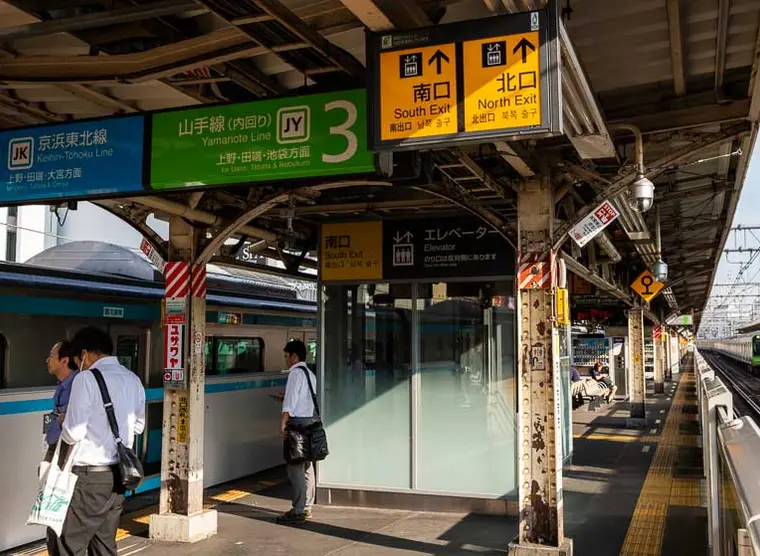

Conclusion: Okachimachi is a mid-sized station that gives you access to a mega-terminal lifestyle.
JR Yamanote Line and Keihin-Tohoku Line are available, and within walking distance you can access Ueno Station, Naka-Okachimachi (Hibiya Line), Ueno-Hirokoji (Ginza Line), and Ueno-Okachimachi (Oedo Line). This means the true value lies not in the station itself, but in the surrounding transport network.
In the morning, you are not dependent on a single route. You can choose alternative paths when delays occur. Being able to walk to Ueno also means Shinkansen and airport access become part of daily life. This is not just convenience—it is flexibility in how you live.
Local reality: Morning commuters are more dispersed than in Ueno, making platforms feel slightly less crowded.
Future image: You begin to control your commute by choosing routes that reduce stress.
2 Area Character
Conclusion: Okachimachi achieves balance by not specializing too much.
Located between Ueno and Akihabara, it functions as the southern edge of Ameyoko. Historically, it developed as a jewelry and wholesale district, and many related shops still remain.
It lacks the overwhelming tourism of Ueno and the niche focus of Akihabara. Instead, it offers a level of density that fits daily life.
Foreign visitors are present, but the area is not dominated by tourism. Locals and visitors blend in a more natural ratio.
Local reality: As you move away from Ameyoko, the atmosphere shifts quickly into something more residential.
Future image: You learn to maintain your daily rhythm while the city flows around you.
3 Safety and Night Atmosphere
Conclusion: Calmer than Ueno, but still part of a busy urban zone.
At night, office workers dominate the streets, and the chaos of Ueno is reduced. However, areas around Ameyoko still require awareness of pickpocketing and theft.
Street solicitation exists but is less aggressive than in Ueno. Quiet backstreets require caution.
Local reality: Main streets are bright and active, but side streets can become quiet quickly.
Future image: You naturally develop awareness of safety based on light, crowds, and movement.
4 Rent
Conclusion: Reasonable for its convenience, but not cheap.
Studio to 1K apartments range from about 80,000 to 110,000 yen. Slightly cheaper than Ueno, but still within a higher range for the Yamanote Line.
Local reality: Prices increase sharply for newer buildings or locations closer to the station.
Future image: You constantly balance convenience against rent in your daily decisions.
5 Shopping Environment
Conclusion: A highly practical and efficient shopping area.
Ameyoko, discount stores, supermarkets, and drugstores provide everything needed for daily life. Prices remain relatively realistic compared to more tourist-heavy areas.
Local reality: Evenings get crowded, but turnover is fast.
Future image: Shopping becomes a quick, efficient part of your routine.
6 Medical Facilities
Conclusion: Strong and reliable healthcare access.
Large hospitals and clinics are available within walking distance, offering a high level of security in daily life.
Local reality: Facilities are actively used by local residents, including elderly populations.
Future image: You experience less stress when dealing with health issues due to proximity.
7 Local Restaurants
Conclusion: Dining here is built for everyday use.
■ Hitsujikoubou
Genre: Chinese
Price: 1,500–3,000 yen
Google: https://www.google.com/search?q=羊香味坊+御徒町
Local reality: A mix of locals and foreign customers reflects the area’s diversity.
Future image: International flavors become part of your daily meals.
■ Yoshike Shokudo
Genre: Japanese
Price: 1,000–2,000 yen
Google: https://www.google.com/search?q=吉池食堂
Local reality: A practical space combining shopping and dining.
Future image: Proper meals become a natural extension of daily errands.
■ Local set-meal shops near Takeya
Genre: Set meals
Price: Around 1,000 yen
Google: https://www.google.com/search?q=御徒町+定食
Local reality: Fast turnover with a strong office worker presence.
Future image: Reliable, no-thinking-needed meals become routine.
8 Ramen
Conclusion: Reliable and efficient ramen culture.
■ Aoshima Shokudo (Akihabara)
Style: Ginger soy sauce
Price: Around 1,000 yen
Google: https://www.google.com/search?q=青島食堂+秋葉原
Local reality: Lines move quickly, making it practical for daily use.
Future image: Even waiting in line becomes part of your routine.
9 Train Line Character
Conclusion: Flexibility is the biggest strength.
Multiple lines within walking distance mean delays rarely stop you. Alternative routes are always available.
Local reality: Many people switch routes instinctively during disruptions.
Future image: You rarely feel “stuck” when traveling.
10 Access to Major Stations
Conclusion: Nearly as strong as Ueno.
Tokyo: about 7 minutes (last train around 0:30 / taxi about 2,500 yen)
Shinjuku: about 20 minutes (last train around 0:20 / taxi about 5,000 yen)
Ikebukuro: about 20 minutes (last train around 0:30 / taxi about 5,000 yen)
11 Shrine, Park, Culture


Conclusion: You live within Ueno’s cultural sphere.
Yushima Tenjin and Ueno Park are within walking distance, making culture part of daily life.
Local reality: Tourist crowds exist, but quieter moments are easy to find nearby.
Future image: Cultural experiences shift from special outings to everyday options.
12 Disaster Risk
Conclusion: Convenience comes with risks tied to density and aging infrastructure.
The area contains many older buildings and small-scale structures, increasing risks during earthquakes such as falling debris, broken glass, and partial collapses. Narrow streets and dense restaurant areas also raise fire spread risks after earthquakes.
High pedestrian density, especially near Ameyoko, may cause evacuation congestion. As a relatively low-lying area, localized flooding cannot be ruled out.
Local reality: Daytime feels safe due to crowds, but nighttime requires awareness of surroundings.
Practical caution: Knowing evacuation routes and wider streets in advance is essential.
13 Pros and Cons
Conclusion: Well-balanced, but not highly distinctive.
Pros
- High transportation flexibility
→ Reduces commuting stress significantly - Efficient daily life with integrated shopping and dining
→ Improves time efficiency - Access to Ueno’s functions without full intensity
→ Balanced lifestyle
Cons
- Disaster risks due to older buildings
→ Requires awareness and preparation - Constant flow of people from nearby tourist areas
→ Not ideal for those seeking quiet - Lack of a defining feature
→ May feel less unique compared to other areas
14 Who It Suits
Conclusion: Best for people who want to use convenience efficiently.
Ideal for those who want access to Ueno’s functions without its overwhelming intensity.
15 Summary
Conclusion: Okachimachi is a place where you actively control and use Tokyo’s systems.
Living here means starting your day by choosing the most efficient route, avoiding congestion, and moving smoothly into central Tokyo. During the day, you handle work and errands efficiently. At night, you return to a slightly calmer environment than Ueno, where shopping and dining can be done quickly and practically.
Seasonal changes bring Ueno Park and Shinobazu Pond within walking distance, turning what would normally be special outings into everyday experiences.
At the same time, risks related to older buildings, dense urban structures, and crowds cannot be ignored. This is not a place to live passively—it is a place for those who understand and actively use the city’s systems.
Living here means shifting from consuming Tokyo to managing and navigating it on your own terms.
Check nearby Yamanote Line stations
← Ueno Station Tokyo Living Guide | Okachimachi Station | Akihabara Station Tokyo Living Guide →