
- In One Sentence
- 1 Basic Information
- 2 Area Character
- 3 Safety and Night Atmosphere
- 4 Rent Prices
- 5 Shopping Environment
- 6 Medical Access
- 7 Local Restaurants
- 8 Ramen
- 9 Train Lines and Connectivity
- 10 Access to Major Stations
- 11 Shrines, Parks, and Cultural Spots
- 12 Disaster Risk
- 13 Pros and Cons
- 14 Who This Area Suits
- 15 Summary
In One Sentence
On the Chuo Line, if you want to reduce commuting fatigue while keeping daily life stable, this station becomes a very strong option.
It is not only about getting somewhere quickly. You can choose to sit, cut the passenger flow, and return to a quieter home base.
That balance lets you keep Kichijoji’s convenience nearby while making your own neighborhood calmer and easier to live in.
1 Basic Information
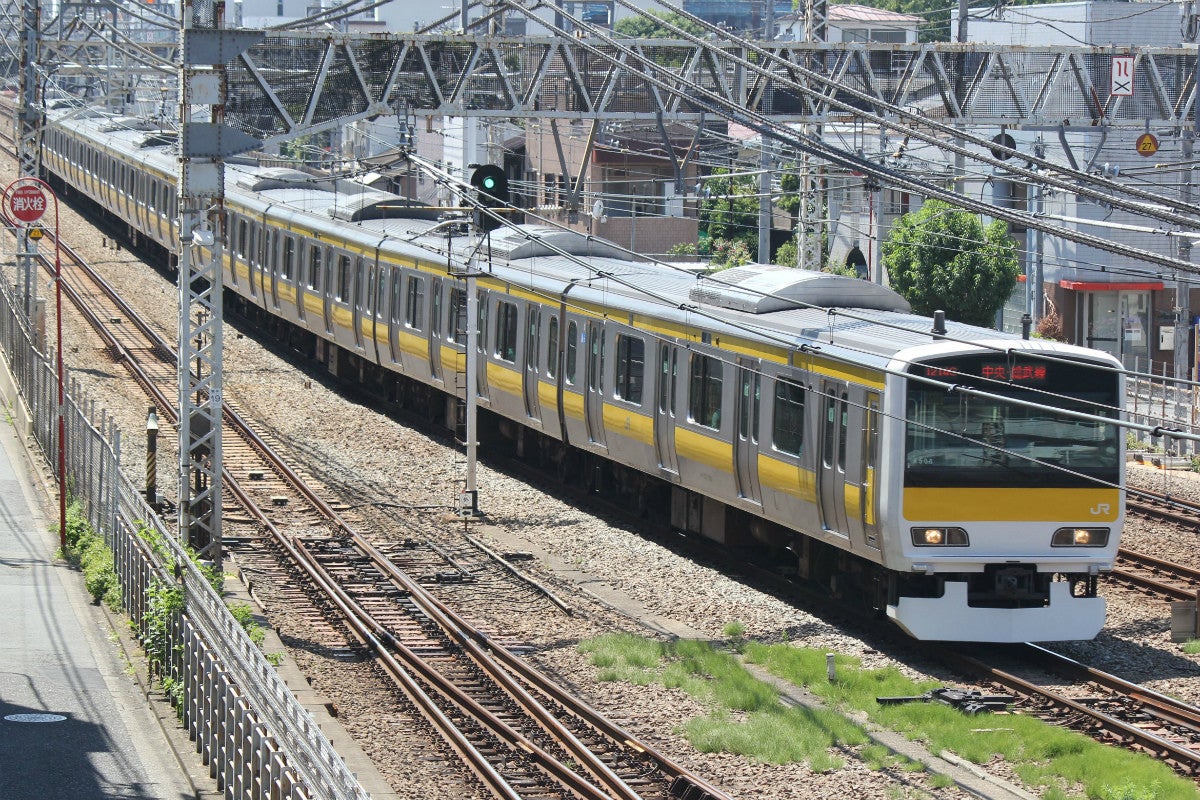

Mitaka is a major station on the JR Chuo Line Rapid and the Chuo-Sobu Local Line, and the station itself functions as a residential hub.
The Chuo Line gives fast access toward Shinjuku and Tokyo, while the Sobu Line allows more detailed movement toward smaller stations such as Nakano, Higashi-Nakano, Iidabashi, and Akihabara.
What really makes the station different is not simply having two lines, but the fact that it has both starting and terminating functions.
The Chuo-Sobu Local Line begins at Mitaka, some Chuo Rapid trains also begin here, and there are trains that terminate at Mitaka.
When you look at the morning platforms, you can immediately see that commuters are making different choices.
Some people want to get there faster even if they have to stand.
Some wait one more train in order to sit.
Others already know the best starting position and line up there from the beginning.
Unlike Kichijoji, the feeling of being compressed by crowds is weaker here, and the sense of choice comes first.
After passing through the ticket gates, people do not pile up in one place. They spread naturally toward the north and south exits.
Even at station level, the rhythm of life already feels different.
2 Area Character
If Mitaka can be summed up in one line, it is a town where extra heat has been lowered for the sake of daily life.
It is not a place like Kichijoji where the station area itself becomes the destination, and it is not a place like Nishi-Ogikubo where independent shop culture stands at the front.
Instead, daily functions are gathered within short distances, and the movement needed to run everyday life is very straightforward.
There are supermarkets, drugstores, cafés, convenience stores, and restaurants on both the north and south sides.
The basics of life are easy to handle without unnecessary detours.
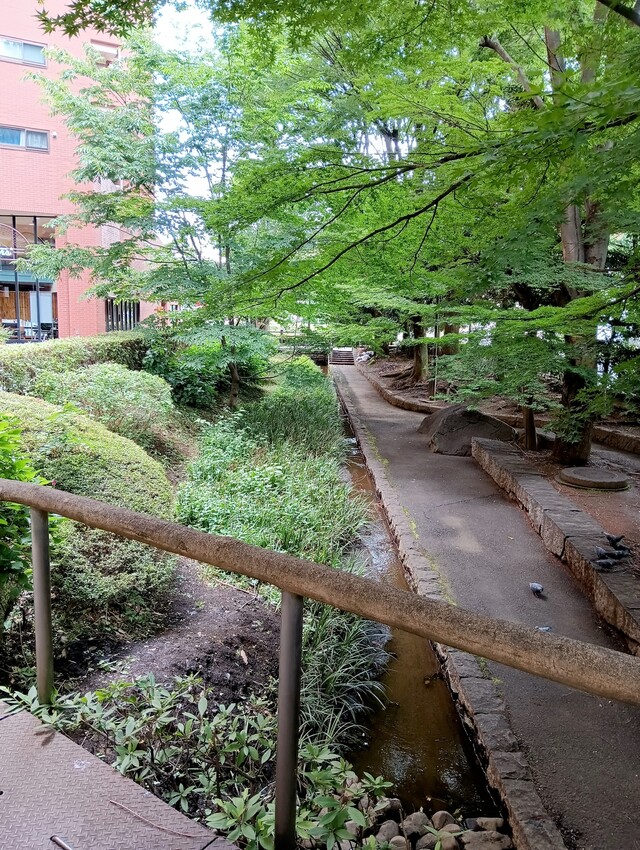
The Tamagawa Josui waterway matters a great deal to the feel of the area.
Because a historic line of water and greenery runs so close to the station, the air on the south side feels softer.
After only a short walk, the colors above you change from asphalt and buildings to trees.
That is not just about scenery. It affects the way the whole neighborhood breathes.
Mitaka has a kind of plainness that works in its favor.
There is no large commercial pressure constantly pulling at you.
When you step out to the station area, you do not get worn down by information overload every time.
Almost everything you need is there, but the town does not aggressively push consumption in your face.
You can use Kichijoji whenever you want trend, shopping, or a more energetic atmosphere, then return to Mitaka and drop back into an ordinary pace.
That switch being only one station away is one of the town’s strongest advantages.
The town also has more historical depth than it first appears.
Mitaka grew together with the early Chuo Line and gradually strengthened its identity as a residential area.
The green line of Tamagawa Josui, the literary connection with Osamu Dazai, and the nearby parks all remain as part of the town’s background.
These are not tourist decorations. They are part of why the atmosphere here stays calm.
3 Safety and Night Atmosphere
The night atmosphere is stable and quiet.
There is no large entertainment district, so as the evening progresses, people’s purpose gradually narrows to simply going home.
There are restaurants around the station, but the liveliness remains local and does not spread far.
After a short walk, the air shifts into a residential calm.
Late at night, sound becomes intermittent rather than continuous.
Even around the station, there is little sense of pressure.
The balance between what you see and what you hear feels controlled.
On the south side, the presence of the waterway and greenery lowers the temperature of the night even more.
On the north side as well, the neighborhood is not so chaotic that it becomes hard to read.
At night here, quietness arrives before fear does.
For foreign residents too, this matters a lot.
A town is easier to settle into when the station area is bright enough to feel safe, but the surrounding residential zone still quiets down properly.
Mitaka offers that balance clearly.
It may feel too calm for someone who wants late-night energy right outside the station, but for many people it lands in exactly the right middle.
4 Rent Prices
Mitaka is not a cheap station, but it is one of the easier places on the Chuo Line to understand why you are paying what you pay.
Compared with Kichijoji, rents are usually a step lower, yet the station still provides strong access and excellent daily function.
For single residents, the realistic range is often in the upper ¥80,000s to low ¥100,000s.
For family households, starting around ¥140,000 is a more realistic baseline.
The important point is that this is not just rent for a room.
It is rent for reduced commuting stress, a stable residential environment, and an everyday life that does not force unnecessary effort.
Another advantage is that Mitaka is easier to strategize.
Whether you stay closer to the station or move slightly farther into calmer residential streets, the area does not suddenly collapse into inconvenience.
That makes it easier to choose what kind of version of Mitaka you want to pay for.
5 Shopping Environment
Shopping in Mitaka is excellent not because it is flashy, but because the movement is simple.
You are not dealing with giant commercial complexes, but daily shopping is easy and efficient.
Supermarkets, drugstores, cafés, and convenience stores are all close enough to fold into an ordinary route home.
The town does not turn shopping into an event.
You buy food and household goods, maybe stop at a bookstore or café, and then return home without losing half the evening.
That matters more than it sounds.
On weekdays especially, a town that does not force your errands to expand is a town that leaves more energy in your life.
If you need more, Kichijoji and Musashi-Sakai are very close.
Mitaka does not try to contain everything inside itself.
Instead, it handles daily life locally and borrows from neighboring stations only when needed.
That makes the lifestyle here feel compact and sustainable.
6 Medical Access
Medical access is strong for everyday life.
There are clinics near the station for general needs such as internal medicine and dentistry, and they fit naturally into normal movement patterns.
At the same time, the Chuo Line makes it easy to reach larger hospitals toward central Tokyo when you need more specialized care.
That means Mitaka works well on two levels.
Routine care stays local and simple, while more serious needs can be handled through wider rail access.
It is the kind of place where going to the doctor does not become a separate expedition.
The facilities are close enough that healthcare feels built into the town instead of tacked onto it.
That clarity matters even more for people new to Tokyo.
Being able to see your usual options first, and only widen the search when necessary, makes the town easier to trust.
7 Local Restaurants
Mitaka’s food scene becomes more interesting when you look for places that fit naturally into daily life rather than chasing obvious excitement.
The strongest places here are not necessarily the most glamorous ones.
They are the ones that settle into your routine.
Toho Bakery
Genre: Bakery
Price range: ¥500–¥1,000
Google Search URL: https://www.google.com/search?q=トーホーベーカリー+三鷹
People keep coming and going from early in the morning, and the atmosphere is clearly that of a neighborhood bakery used by local residents.
Mitaka suits a lifestyle where you step outside to pick up the start of your day, and this place fits that rhythm perfectly.
Shokudo Nora
Genre: Set meals
Price range: ¥1,000–¥2,000
Google Search URL: https://www.google.com/search?q=食堂のら+三鷹
Just a short walk from the south exit, this is the kind of place where ordinary food is done properly.
Mitaka’s strength is that daily life still has room for places where you can eat well without turning the meal into a special occasion.
It works naturally on the way home from work, even if you are alone.
Cafe Hi famiglia
Genre: Café
Price range: ¥1,000–¥2,000
Google Search URL: https://www.google.com/search?q=Cafe+Hi+famiglia+三鷹
A little farther from the station, this is the kind of café that can function as a third place.
It is not only for eating.
It is for staying, resetting, and existing somewhere between home and work.
Mitaka is a town where life does not have to collapse into a simple back-and-forth, and a place like this helps make that true.
8 Ramen
Mitaka is not a ramen landmark in the same way Ogikubo is, but it is strong in a different way.
Ramen here fits easily into daily life, and the shops tend to feel like natural extensions of the town rather than spectacle.
Chuka Soba Mitaka
Genre: Soy sauce ramen
Price range: ¥800–¥1,200
Google Search URL: https://www.google.com/search?q=中華そばみたか+三鷹
Close to the south exit, this is the kind of place that becomes a baseline.
The turnover is fast, but the atmosphere is not harsh.
It is the kind of shop that quietly enters your routine and stays there.
Ramen Bunzo
Genre: Tonkotsu-gyokai ramen / tsukemen
Price range: ¥850–¥1,200
Google Search URL: https://www.google.com/search?q=らーめん文蔵+三鷹
Also near the south side, this is the kind of bowl you choose when you want a little more weight and satisfaction without turning the meal into a full event.
The location is easy, but the experience still feels distinct enough to matter.
Ramen Sukoyaka
Genre: Ramen / tsukemen
Price range: ¥1,000–¥2,000
Google Search URL: https://www.google.com/search?q=ラーメン健やか+三鷹
On the north side and a short walk from the station, this is the kind of ramen shop that gives you a reason to move through the neighborhood.
That suits Mitaka well.
Not every good bowl has to sit directly in front of the station.
Some of them work better as part of a weekend walk.
9 Train Lines and Connectivity
This section is the core of what makes Mitaka different.
Mitaka is not simply “a convenient Chuo Line station.”
It is a station that changes how you can design your commute.
First, the Chuo Line Rapid.
This is the main fast route toward Shinjuku and Tokyo, and Mitaka is a stable major stop.
Unlike places such as Nishi-Ogikubo, where weekday daytime rapid pass-through patterns affect daily life, Mitaka is easy to build around with rapid service at the center.
When you want to shorten the morning, or when you want the fastest route home late at night, that speed converts directly into extra room in your life.
Next, the Chuo-Sobu Local Line.
This is where Mitaka becomes especially strong.
The line starts here, and Mitaka’s adjacent train depot supports that function.
That means you can realistically sit for trips toward Nakano, Higashi-Nakano, Iidabashi, and Akihabara.
This changes more than comfort. It changes the quality of the trip itself.
Then there is the fact that some trains terminate at Mitaka.
That means the passenger flow cuts here.
When you are coming back from central Tokyo, you can feel what this does to the atmosphere inside the train.
The carriage empties. The movement resets.
Compared with stations farther west, Mitaka feels more strongly like a place where people actually finish their day.
So daily life here gives you three distinct layers of movement:
take the Chuo Rapid when speed matters,
take the Sobu Local when sitting matters,
or use Mitaka’s terminating function as a point where the passenger flow resets.
On the morning platform, those choices are visible as different lines of people.
Some are willing to stand for speed.
Some let one train go by so they can sit.
Some head straight toward the Sobu Line.
You are not just being carried by the train system here.
You are deciding what kind of fatigue you are willing to accept that day.
Over time, that changes daily life more than most people expect.
10 Access to Major Stations
Shinjuku Station is about 13 to 19 minutes away by the Chuo Line Rapid.
That makes it easy to use for work, nightlife, or anything else that requires direct central access.
Tokyo Station is around 31 to 33 minutes away.
It is not as effortless as reaching Shinjuku, but it is still realistic for business trips and Shinkansen access.
Kichijoji Station is only about 2 to 3 minutes away.
That makes Kichijoji feel less like a separate destination and more like an extension of your own living area.
Nakano Station is roughly 14 to 15 minutes away, and the Sobu Line gives a direct option as well.
This makes Mitaka strong not only for fast movement, but also for detailed entry into the city.
11 Shrines, Parks, and Cultural Spots
Hachiman Daijinja Shrine

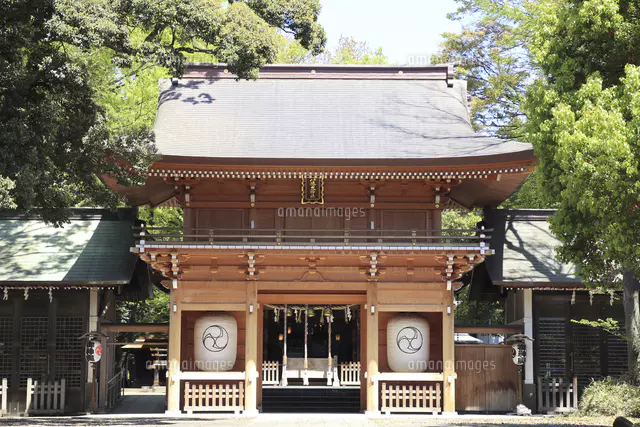


This shrine sits naturally within the residential streets on the south side of Mitaka.
Once you step inside, the pace of the town drops by one level.
It is the kind of place you walk to not for a major event, but simply to reset the air around you.
Inokashira Park (Mitaka Side)


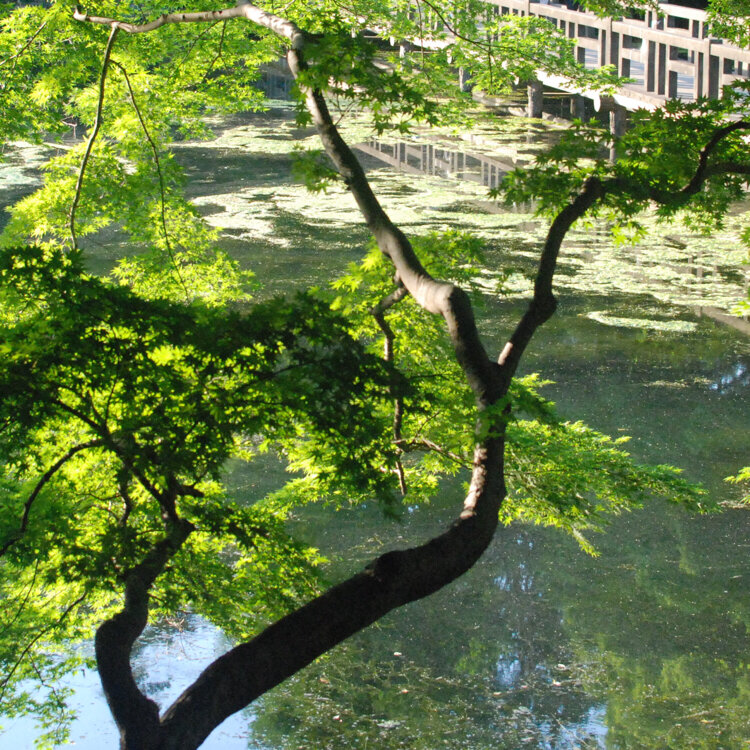

The Mitaka side of Inokashira Park is calmer than the Kichijoji side.
The density of people loosens, and the park becomes easier to use simply for walking.
The water opens out, the trees stay audible, and the town’s information load falls away.
Mitaka’s strength is not just that a major park is nearby, but that you can approach that park from its quieter side.
Ghibli Museum, Mitaka
Tucked inside the greenery near Inokashira Park, the Ghibli Museum adds a very different layer to Mitaka’s identity.
It is not only a famous destination. It also feels woven into the town’s everyday atmosphere in a way that is rare in Tokyo.
The route toward the museum already changes the mood of the day.
You move away from the station rhythm, pass through calmer streets and greenery, and gradually enter a space where imagination feels close.
That transition suits Mitaka especially well.
This is a town where daily life and quiet cultural depth sit side by side.
Inside, the museum is less about speed and more about attention.
Animation, architecture, color, and small details are allowed to breathe.
Even for people who are not deeply devoted fans, it becomes the kind of place that slows your pace and changes how you look at the neighborhood around it.
For residents, this matters in a practical way too.
Living near a place like this means having access not only to convenience, but also to a softer kind of weekend.
You can spend the week using Mitaka as a stable commuter base, then step into a space of creativity without needing to cross the whole city.
That contrast gives the station more emotional range than it first appears to have.
Mitaka also gains cultural depth from its connection to Osamu Dazai.
This is one of the reasons the area does not feel made only of commuting convenience and residential function.
The town carries literature, water, greenery, and rail structure together in the background.
12 Disaster Risk
In disaster terms, the land itself is relatively readable.
Mitaka is on the Musashino Plateau, so it does not carry the same broad flood vulnerability you would expect in low-lying river areas.
That said, heavy rain and local flooding still require preparation.
In everyday residential terms, the main risks appear more in the smaller streets than at the station front.
Larger roads offer clearer escape routes, but once you move into the housing areas, the network of narrow streets can become more complicated in an emergency.
That means Mitaka is not a place that feels especially weak in disaster terms, but it is a place where you are better off deciding your likely escape direction in advance.
The area around Tamagawa Josui is beautiful in daily life, but during strong rain it stops being just scenery.
At the same time, schools, parks, and larger open spaces give useful points of orientation.
Like many convenient stations, Mitaka’s calmness in ordinary life can make it easy to forget that an emergency changes how the same spaces work.
13 Pros and Cons
The first major advantage is commuting flexibility.
Fast movement on the Chuo Rapid, seated movement on the Sobu Local, and the passenger reset created by Mitaka-terminating trains all change the shape of daily fatigue.
This is not only convenience. It is control over how the day takes energy from you.
The second advantage is that everyday life is gathered clearly around the station.
Shopping, clinics, and light dining are easy to fold into ordinary routines.
Weeknights do not expand more than they need to.
The third advantage is having Kichijoji next door while keeping your own base calmer.
You can borrow energy, shopping, and nightlife when you want them, but your own station area does not have to stay that loud every day.
There are weaknesses too.
The first is that the station area is not exciting in a flashy way.
You can eat well and shop easily, but if you want a strong emotional lift from the station front itself, Mitaka may feel too restrained.
The second is that the town can seem plain at first.
That plainness becomes a strength once you live there, but from a first-impression point of view, it may feel less exciting than neighboring stations.
The third is that rent is not low enough to call it a bargain zone.
The value is real, but the price already reflects the station’s function and reputation.
14 Who This Area Suits
Mitaka suits people who want to reduce daily friction.
It works especially well for people who already understand that commuting stress changes the quality of the whole day.
It also suits people who want to live in Tokyo without being surrounded by too much station-front intensity.
For foreign residents, it is easier to build life here because daily shopping, clinics, and train access are all clear, while Kichijoji remains only one station away when you want more.
On the other hand, people who want stronger nightlife, more immediate excitement, or more obvious station-front glamour may find Mitaka too quiet.
This is a station for people who choose stability over spectacle.
15 Summary
In the morning, daily life begins with a real choice: take the rapid line for speed, or take the Sobu Line from the start and sit.
During the day, errands can be handled in short station-centered routes.
At night, you can return without being pulled too strongly into entertainment districts.
On weekends, you can widen into Kichijoji or lower the temperature through Tamagawa Josui and the Mitaka side of Inokashira Park.
In spring, the greenery and cherry blossoms matter.
In summer, the tree shade becomes valuable.
In autumn and winter, the town’s plainness starts to look more like calm.
The people who fit Mitaka are probably people who want to remove one source of strain after another from daily life.
It is not a station that tries to give you everything at once.
But it gives you most of what long-term life actually needs.
If you want both convenience and quiet on the Chuo Line without making excuses for either one, Mitaka becomes a very serious option.
Check nearby Chuo Line stations
Kichijoji Station Tokyo Living Guide | Mitaka Station Tokyo Living Guide | Musashi-Sakai Station Tokyo Living Guide