
- In One Sentence
- 1 Basic Information
- 2 Area Character
- 3 Safety and Night Atmosphere
- 4 Rent Prices
- 5 Shopping Environment
- 6 Medical Access
- 7 Local Restaurants
- 8 Ramen
- 9 Train Lines and Connectivity
- 10 Access to Major Stations
- 11 Shrines, Parks, and Cultural Spots
- 12 Disaster Risk
- 13 Pros and Cons
- 14 Who This Area Suits
- 15 Summary
In One Sentence
On the Chuo Line, Kichijoji is still the place where convenience, fun, and livability coexist at an unusually high level.
The station front is full of commercial energy, but walk a little and the air loosens around the water and greenery of Inokashira Park, while at night the lights of Harmonica Yokocho and the quiet of the residential streets sit inside the same living area.
Live here, and daily life in Tokyo becomes a little brighter without needing to go anywhere special.
1 Basic Information

Kichijoji is a major west-Tokyo living hub where the JR Chuo Line Rapid, the Chuo-Sobu Local Line, and the Keio Inokashira Line meet. It is not just a commuter station. It is also the kind of station where the town itself becomes a destination. On the JR side alone, you can use both the Chuo Line Rapid and the Chuo-Sobu Local Line, and Kichijoji is also the starting station of the Inokashira Line, which makes daily movement toward Shinjuku, Tokyo, and Shibuya all easy to build into normal life.
What makes this station different is that the appeal does not stop at transport convenience. On the north side, Sun Road, Harmonica Yokocho, department stores, and fashion buildings are packed together. On the south side, the walking flow stretches toward Inokashira Park. The moment you leave the station, shopping, eating, walking, and resting all split into different directions at once. At the ticket gates, the flow of people breaks into several streams immediately. Live here, and simply “going to the station area” opens up several possible versions of your day.
2 Area Character
Kichijoji is a place where a large commercial district, independent shop culture, and park-adjacent residential life all exist at the same time. Around the station, you have Atre Kichijoji, Kirarina Keio Kichijoji, Tokyu Department Store, Coppice Kichijoji, and Kichijoji PARCO, which means everything from daily errands to higher-energy shopping can be handled within the station area. At the same time, areas like Harmonica Yokocho and Nakamichi Street still keep small independent stores alive in narrow side streets. The town has not been flattened into a single big-capital commercial zone, which is why it stays convenient without becoming completely uniform.
Structurally, the north side is the district of consumption and circulation, while the south side is the route toward the park and residential streets, with the station sitting between them. The north side stays busy day and night with shoppers, students, visitors, and Inokashira Line users all mixing together. The south side carries people toward Inokashira Park, and once you pass the station-front bustle, the residential mood quickly becomes stronger. That separation is exactly why Kichijoji can pull off the almost unfair balance of being lively and still livable. In the daytime, the flow on Sun Road hardly breaks, but once you head south, the spacing between footsteps suddenly widens. Live here, and you can keep the fun of the station front and the calm of home inside the same walking radius.
Kichijoji also plays a different role from nearby Nishi-Ogikubo or Mitaka. If Nishi-Ogikubo is a town that protects quietness, and Ogikubo is a town built on balance, then Kichijoji is a town with almost too many lifestyle options. This is not just another way of saying convenient. It means your daily life does not need to stay fixed in one shape. Some days you just shop and go home. Some days you walk through the park to clear your head. Some days you meet people, and some days being alone still feels right. Live here, and every day gives you a small choice about how you want to spend it.
3 Safety and Night Atmosphere
Kichijoji is a place that is generally easy to live in safely, but the character of the night changes quite a lot depending on where you are. Around the station front, there are plenty of lights and people even late at night, so it is not the kind of station area that feels dark and unsettling for someone walking alone. That said, around Harmonica Yokocho on the north side and around dense restaurant zones, the later it gets, the more drunk customers and younger groups you will see, and the atmosphere becomes clearly different from the surrounding residential streets. Kichijoji is not best understood as a dangerous town. It is more accurate to think of it as a town where time and location create noticeable contrast.
For actual residents, what matters is that this contrast is readable. Once you pass through the north-side bustle and move toward areas like Higashicho, Minamicho, or Gotenyama, the atmosphere at night becomes much calmer. The Inokashira Park side still carries some visitor energy, but it lacks the pressure of a station-front entertainment district, and later at night the sound tends to fade away. At night, Harmonica Yokocho feels packed with concentrated light, but once you step away, the scene quickly changes to apartment windows and quiet streets. Live here, and daily life becomes the feeling of looking at lively nightlife from the side and then walking back into a calm place of your own.
From a foreign resident’s point of view, Kichijoji is highly livable. The density of shops and people around the station makes it easy to set up daily life in the beginning, and the strong café and restaurant culture lowers the barrier to spending time outside. On the other hand, popularity brings real weaknesses: higher rent, higher everyday prices, and heavy crowds on weekends. This is not a town that suits everyone just because it is convenient. The real dividing line is whether you can accept the number of people that comes with all that convenience.
4 Rent Prices
Kichijoji is one of those Chuo Line stations where rent often includes a clear premium for the station name itself. Transport, shopping, restaurants, the park, and even the town’s reputation all work in its favor, so the name “Kichijoji” becomes part of the housing value. For single-person apartments, rents often fall around ¥90,000 to ¥130,000, while family properties frequently go beyond ¥160,000. This is not a station you choose because it is cheap. The rent here feels less like a location fee and more like a payment for having convenience and enjoyment at close range in the same daily life.
That said, the actual experience changes a lot depending on where exactly you live. Near-station areas such as Minamicho and Honcho tend to be more expensive because the convenience is immediate. If you move a little farther out toward Higashicho, Gotenyama, or even closer to Inokashira-koen Station or Mitakadai Station, you can still use Kichijoji while living in a slightly calmer environment. In that sense, Kichijoji is a town where your rent strategy changes depending on whether you want to live in central Kichijoji itself or at a distance where you “use Kichijoji” as your main area. Live here, and rent becomes a question not just of room size, but of which version of Kichijoji you are paying for.
5 Shopping Environment
Kichijoji’s shopping environment is good enough to call one of the strongest in Tokyo. Around the station you have Atre Kichijoji, Kirarina Keio Kichijoji, Tokyu Department Store, Coppice Kichijoji, PARCO, and Yodobashi Camera, all concentrated within walking distance. Food, daily goods, electronics, clothing, and miscellaneous items can all be handled on foot. Because both everyday shopping and hobby-oriented shopping can be done in the same station area, the number of reasons to go to another town drops sharply. On rainy days, the station-connected buildings matter even more, and on days when you are carrying more things, the movement paths stay easy to read.
What makes Kichijoji more interesting is that the story does not end with big buildings. You still have the classic shopping arcade feel of Sun Road, but you also have Nakamichi Street’s smaller independent stores and the tiny shops of Harmonica Yokocho still living inside the normal daily area. That means the town is not just a place where “everything is available.” It is also a place where “today I will choose a smaller shop on purpose” still makes sense. Shopping stops being only a task and starts overlapping with walking and mood-resetting. Live here, and “buying what you need while lifting your mood a little” becomes normal.
6 Medical Access
Kichijoji is a town where everyday medical access is strong and broader-area medical connections are also easy to use. Around the station, clinics for internal medicine, dentistry, dermatology, ophthalmology, and other common needs are clustered closely enough that fitting a visit into normal daily movement is realistic. At the same time, the JR lines and the Inokashira Line make it easy to reach larger hospitals in broader areas such as Shinjuku or the Musashino-Mitaka side. It is a town where daily care can be handled around the station while more specialized care can be picked up across the wider network.
For foreign residents, this concentration of options around the station matters a lot. When you first move into a new area and need to find a clinic, how close it is to the station, whether you can combine it with shopping, and whether the movement is simple all matter. Kichijoji is clear and readable in that sense. On weekday afternoons, you can see quiet lines outside clinics, and going to the doctor does not feel like a major event. Live here, and this stops being the kind of town where you only start searching in a panic after you feel sick.
7 Local Restaurants
Kichijoji is a place where you do not need to drift into major chains just to find somewhere practical to eat in daily life. There are many visitor-facing places, but if you shift your perspective slightly, you can still find restaurants that fit naturally into a resident’s routine.
■ Kayashima
・Genre: Café / Western-style meals
・Price range: ¥1,000–¥2,000
・Google Search URL: https://www.google.com/search?q=Kayashima+Kichijoji
・Local realness: Even close to the station, the pace of eating slows down a little here.
・Future image: On your way home from work, you start using solo meals outside as a kind of rest.
■ Sippo
・Genre: Set meals / Café
・Price range: ¥1,500–¥2,500
・Google Search URL: https://www.google.com/search?q=Sippo+Kichijoji
・Local realness: Slightly away from the north-side bustle, food and daily life sit closer together here.
・Future image: On weekends, you start choosing a meal that resets you rather than just another shopping stop.
■ TONY’s PIZZA
・Genre: Pizza
・Price range: ¥1,500–¥3,000
・Google Search URL: https://www.google.com/search?q=TONY%27s+PIZZA+Kichijoji
・Local realness: It carries the slightly nostalgic air of the south side and feels less like a tourist stop than a place that has stayed with the town for years.
・Future image: When friends visit, it becomes one of those places that shows Kichijoji naturally, without trying too hard.
The strength of dining in Kichijoji is not just the number of restaurants. It is the detail in how you can use them. On some days you finish near the north-side station front. On others you walk a little to find a calmer place. On others you head toward the Inokashira Park side. Eating out here does not stay as pure entertainment. It becomes part of your daily movement itself. Live here, and “where to eat” stops being a formal plan and starts being something decided by mood.
8 Ramen
Kichijoji is not usually spoken about as a sacred ramen town in the same way Ogikubo is, but it is a strong ramen area in terms of range. Within walking distance, you get variety across ie-kei, clear broth styles, and tsukemen, which means even one bowl of ramen can be used differently depending on the day.
■ Dokutsuya
・Genre: Iekei ramen
・Price range: ¥1,000–¥1,500
・Google Search URL: https://www.google.com/search?q=Dokutsuya+Kichijoji
・Local realness: Close to the south exit, it has the feel of a place people enter when they want real weight and satisfaction, and the flow moves efficiently.
・Future image: Even on a late trip home, “this is enough for tonight” becomes a positive choice.
■ Tombo
・Genre: Shoyu ramen / Tsukemen
・Price range: ¥1,000–¥1,500
・Google Search URL: https://www.google.com/search?q=Tombo+Kichijoji
・Local realness: A little away from the station-front noise, the air feels focused on eating itself.
・Future image: Going for one bowl as an extension of a walk becomes a very Kichijoji kind of weekend habit.
■ Enji Kichijoji Sohonten
・Genre: Vegetable-potage tsukemen
・Price range: ¥1,000–¥1,500
・Google Search URL: https://www.google.com/search?q=Enji+Kichijoji+Sohonten
・Local realness: The flow of people wanting a filling meal never quite breaks, and you can feel the younger side of the town here.
・Future image: After a long day of shopping and walking, you end the day with a solid sense of completion.
What makes ramen in Kichijoji strong is that it does not collapse into the blandness you sometimes get in a big commercial district. Some shops are efficient and close to the station. Others are places you reach after walking a little. Even for ramen, Kichijoji lets you choose between efficiency and a short stroll. Live here, and eating out stops being simple hunger management and becomes part of how you use the town.
9 Train Lines and Connectivity
Kichijoji is a station where the speed of the Chuo Line, the finer stop-by-stop movement of the Chuo-Sobu Local Line, and the direct Shibuya access of the Inokashira Line all come together. It is not just convenient. Because you can change your route depending on your destination, the time of day, and even your mood, it becomes easier to control your daily travel stress yourself. This is a very different kind of strength from Nishi-Ogikubo, where you live on the assumption of local trains in exchange for quiet, or from Ogikubo, where the Marunouchi Line starting point lets you build a commute strategy around seating.
On the JR side, the Chuo Line Rapid stops properly at Kichijoji and lets you move quickly toward Shinjuku and Tokyo. At the same time, the Chuo-Sobu Local Line is also available, which makes smaller-stop movement toward places like Nakano, Higashi-Nakano, Iidabashi, and Akihabara easy to handle. In other words, Kichijoji lets you switch at the same station between moving fast and wide, and moving in a more finely cut way. On days when you need to rush toward Shinjuku, you use the rapid line. On days when you want to move carefully toward smaller stations in central Tokyo, you use the local line. Even the mood of the lines on the platform is slightly different, with some people clearly in a hurry and others already reading quietly. Live here, and the line you choose can change how tired you feel by the end of the day.
The Inokashira Line matters a lot too. Kichijoji is the terminal station of the line, which means you can go straight toward Shibuya. Chuo Line for Shinjuku, Inokashira Line for Shibuya. Having direct access to both of these major Tokyo hubs from the same home station is stronger than it sounds. Even the cultural direction of your day changes. Some days you use the Tokyo reached through the Chuo Line. Other days you use the Tokyo reached through the Inokashira Line. Live here, and it feels less like your range expands and more like the ways you can cut into the city multiply.
In terms of special stopping rules, Kichijoji also gives a strong sense of stability. Unlike stations such as Nishi-Ogikubo, Asagaya, or Koenji, which are more heavily affected by weekday rapid-train pass-through patterns, Kichijoji stays easy to build around with rapid service at the center. That means the drop-off of “it is weekday daytime, so it suddenly becomes inconvenient” is relatively small. The station can process large numbers of people, and while it is crowded, it rarely feels like a station that is hard to use. Live here, and daily life becomes the ability to choose between these three patterns depending on the purpose of the day:
・go quickly to Shinjuku
・move finely on the Chuo-Sobu Local Line
・slip toward Shibuya on the Inokashira Line
And over time, what you realize is that a station with several correct answers is stronger in the long run than a station that is just “convenient.”
10 Access to Major Stations
Shinjuku Station: about 15–18 minutes. The Chuo Line Rapid makes it easy to get there quickly, and the last trains are usually manageable. Even if you stay out late, taking a taxi back is still realistic, which makes work and nightlife both easier to control. Depending on the day, the last train varies, but there are plenty of late-night services, and a taxi is usually around ¥5,000–¥6,500.
Tokyo Station: around 30 minutes. It does not feel quite as effortless as getting to Shinjuku, but the transfer burden is still light enough for daily life. It is realistic for business trips and Shinkansen use, making it easy to live on the western side of the Chuo Line while still using central Tokyo’s major transport hub. For late-night returns, taxis get expensive quickly, so in practice it is often smarter to get back toward Shinjuku first and think from there.
Shibuya Station: about 16–20 minutes. Because the Inokashira Line goes straight there and seating may be possible from the terminal, one of Kichijoji’s biggest strengths is that a Chuo Line home station can still connect easily into Shibuya’s cultural sphere. The last-train rhythm is easy to read, and because JR and private railway options both exist, your movement patterns stay flexible. Live here, and weekends can change in mood simply depending on whether you choose the Shinjuku side or the Shibuya side.
Mitaka Station: about 2–3 minutes. Nishi-Ogikubo Station: about 3 minutes. The neighboring stations are so close that it feels less like you are supplementing Kichijoji with them and more like you are using their atmospheres as extensions of your life. Mitaka offers a slightly calmer mood. Nishi-Ogikubo offers a quieter, more independent-store-centered kind of calm. Living in Kichijoji means not just living in one station area, but holding the center of a wider, multi-station lifestyle zone.
11 Shrines, Parks, and Cultural Spots
Musashino Hachimangu Shrine

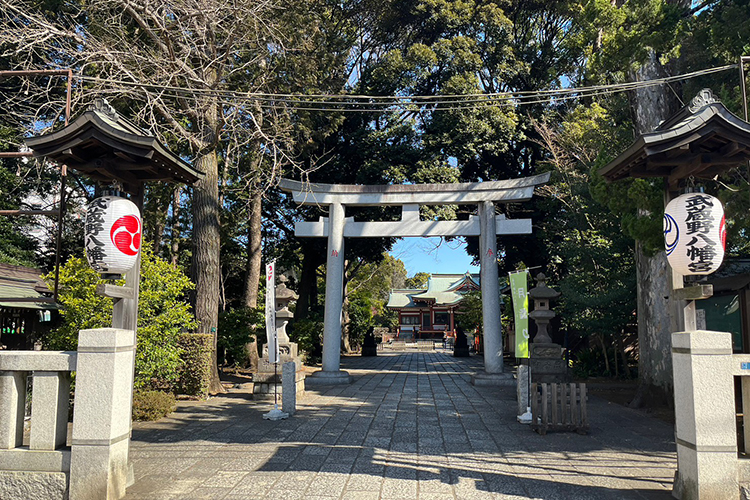
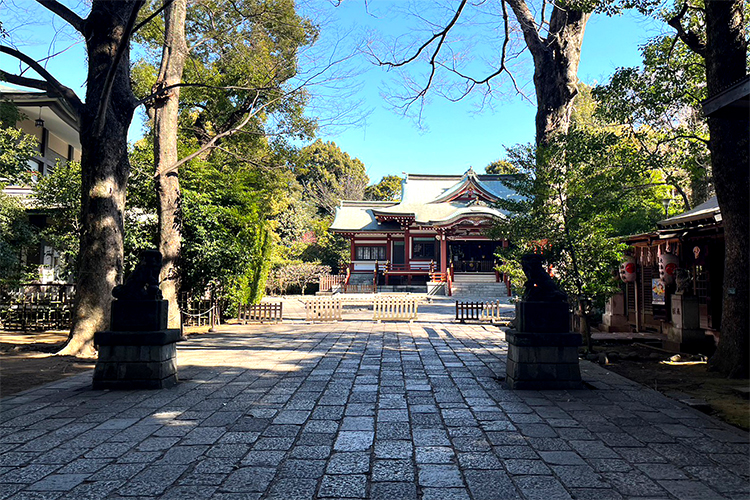

If you choose one shrine in Kichijoji, Musashino Hachimangu is one of the best places to feel the town’s quieter side. As a local guardian shrine within walking distance from the station, it reminds you that Kichijoji is not just a commercial zone but also a place people actually live in. Once you step into the grounds, the heat of the station area drops by a level. The trees feel tall, and the sky seems a little wider. Live here, and you gain one place in town you walk to for reasons that have nothing to do with shopping or eating.
Inokashira Park
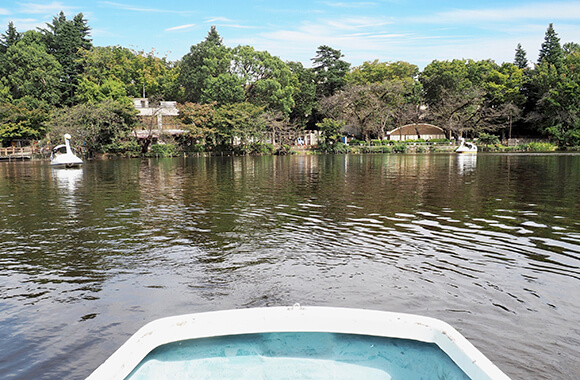
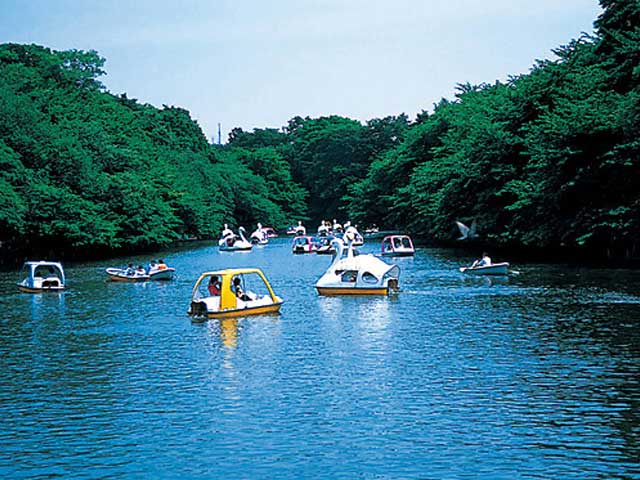

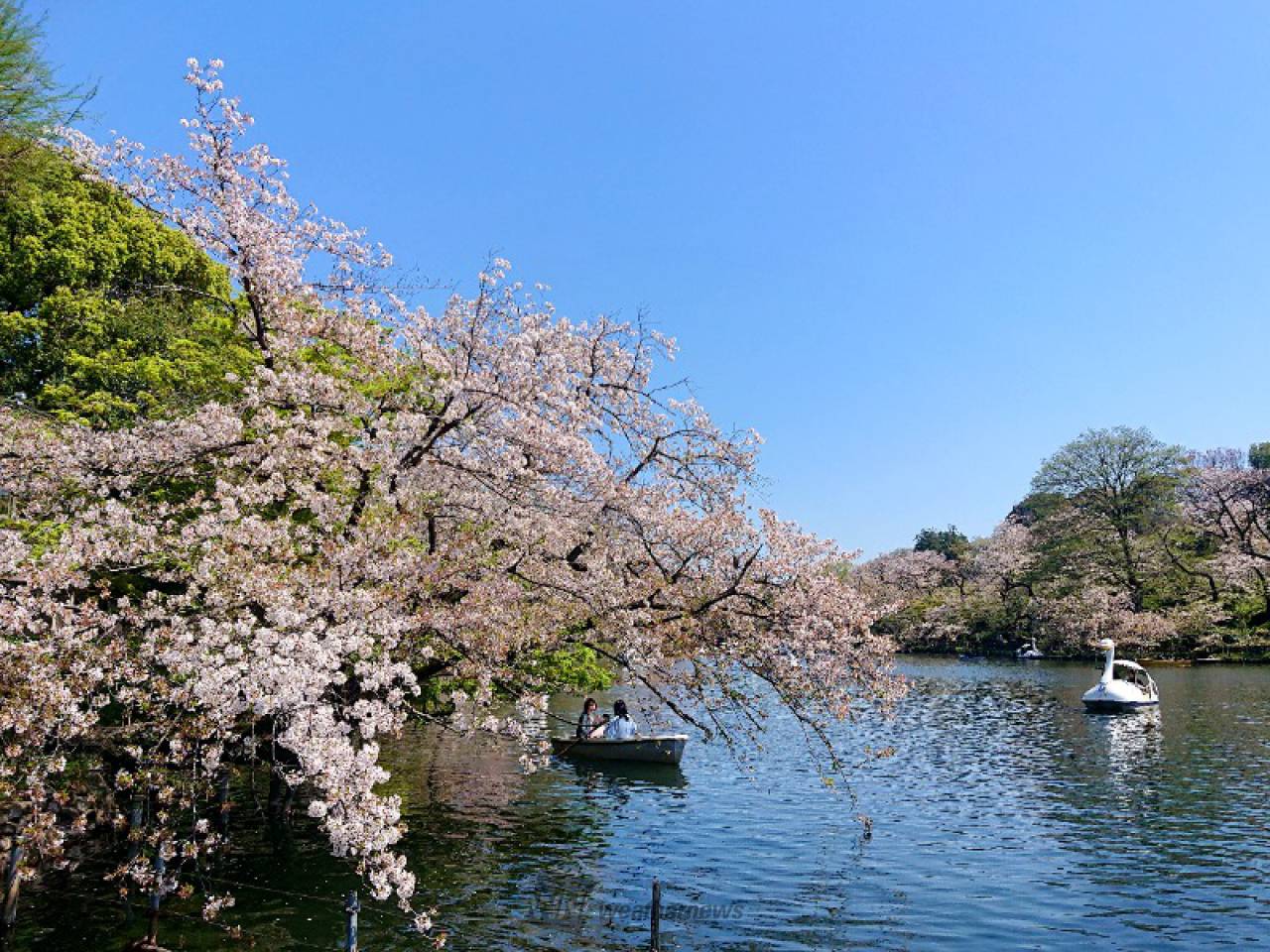
For parks in Kichijoji, it has to be Inokashira Park. It is a large metropolitan park spreading across both the Musashino and Mitaka sides, and despite being close to the station, it contains a pond, walking paths, green space, and cultural facilities. Spring cherry blossoms, plum season, waterfront walks, and even the relaxed feel of weekdays all support a huge part of Kichijoji’s living value. There are busy days, of course, but even then it rarely turns into the kind of crowd with no place to escape. Once you get close to the pond, the town’s sound grows slightly distant. Live here, and you get weekends where doing nothing but walking still feels enough.
If you include cultural facilities, Inokashira Park Zoo and the area’s temple history also give Kichijoji more depth. The town is often seen through its newer shops, but what keeps it from becoming a place made only of trend is the deeper layer of park culture and shrine-and-temple accumulation. After you actually live here, those layers matter even more. Live here, and the town’s pleasures slowly change shape with your age and your mood.
12 Disaster Risk
Kichijoji is a town where the ground is generally stable, but where water and fire risk still vary depending on the exact location. It is not the kind of town that is broadly weak to disaster, but it is not a place where you can ignore everything either. In earthquakes, the real-life risks are more likely to come from the crowded station-front commercial area, older buildings, and congestion in narrow back streets than from the land itself.
For flooding, the station-front zone is not directly exposed to the kind of large-river danger that creates the worst conditions, but around the Inokashira Park side and lower-lying areas, heavy rain and localized flooding still need attention. The real way to read Kichijoji is not just as one town, but as north side or south side, park-side or not, older restaurant district or newer residential stretch. Fire risk is more serious in dense restaurant clusters and areas where older houses remain. In terms of evacuation, large roads are comparatively strong, but narrow side-street areas may become hard to pass if people gather at once. If you live here, the realistic mindset is not “it is convenient, so it is safe,” but “because it is convenient, a lot of people will be here in an emergency too.”
In daily-life terms, Kichijoji’s disaster risk often shows up more outside the home than inside it. The number of people around the station, the possibility of getting stuck while shopping or eating out, and holiday congestion around the park are all popular-area problems. That is why, if you live here, it matters to know your evacuation flow from home to station, which direction you would move north or south, and which park or open area you would head for. Live here, and even though the town feels bright and lively in normal times, emergencies make you confront the fact that you live in a place where many people gather.
13 Pros and Cons
Pros
The first strength is the sheer number of lifestyle options. Shopping, eating out, park time, commute routes, and weekend plans all exist within one station area at a very high level. This is not just about convenience. It means you can decide on the spot whether today is a low-energy day or a day to enjoy yourself a little more. Daily life is less likely to flatten into routine.
The second strength is transport flexibility. Chuo Line Rapid for Shinjuku and Tokyo, Chuo-Sobu Local Line for smaller-stop movement, and Inokashira Line for Shibuya. These three pillars make life in Tokyo much easier to shape not just for commuting, but for after-work plans, meeting people, and deciding what kind of weekend you want.
The third strength is that even with all its brightness, the town still has real places to escape into. Popular areas usually trade convenience for fatigue, but Kichijoji softens that pressure with Inokashira Park and surrounding residential districts. You do not just burn through the station area. You can walk yourself back into calm. That difference matters more the longer you live here.
Cons
The first weakness is that rent and prices are high. Because of its popularity and convenience, both housing costs and eating-out costs tend to accumulate in a way you really feel over time. The town’s reputation as a desirable place to live turns directly into your monthly fixed spending.
The second weakness is congestion, especially on weekends and in the evening. The station area, the shopping arcades, and the park all get crowded, and on days when you want silence, simply going out into the main area can tire you out. Convenience here sometimes comes with the price of information overload.
The third weakness is that the town is simply too good at making you spend money. That sounds like a joke, but it is real. Interesting shops, tempting restaurants, and things worth buying are always entering your field of vision. Unlike a place like Nishi-Ogikubo, where quietness naturally tightens life, Kichijoji tends to loosen your wallet through enjoyment. Live here, and satisfaction is high, but so is the risk of feeling your everyday spending drift upward.
14 Who This Area Suits
Kichijoji suits people who want daily life itself to lift their mood, not just support commuting. If a town that is only convenient feels too thin, but a place like Shinjuku feels too intense to live in, Kichijoji fits very well. It is especially strong for people who like spending time outside, who naturally drop into cafés, bookstores, or parks, and who want weekends that can be reset nearby without planning a big trip.
It also suits foreign residents well. The reason is that transport, shopping, parks, walking, and food are all gathered in a way that makes daily life easy to start. At the same time, larger urban functions remain easy to reach through Shinjuku and Shibuya, while the home area itself still works as a real living district rather than a pure tourist core. On the other hand, people who are sensitive to crowds, people who need lower costs, or people who want quiet above everything else may find Kichijoji a little too strong. Live here, and you are not choosing “a silent town with nothing happening.” You are choosing a town where daily life stays a little lively.
15 Summary
Kichijoji is a town that makes living in Tokyo look a little richer.
In the morning, you head into the city on the Chuo Line Rapid or the Inokashira Line. During the day, you take care of errands in the station-front commercial area. At night, you walk home past the restaurant lights into residential calm. On weekends, you stroll through the park, pass through shopping streets, and, if the mood is right, stop by an independent shop. In spring, the flowers around Inokashira Park soften the density of the town. In summer, the tree shade gives you somewhere to escape. In autumn, walking becomes especially good. In winter, the station-front lights make daily life look a little more vivid.
The kind of person who lives here is probably someone who does not want to give up everything. They want commuting to stay convenient. They want shopping to stay easy. But they also do not want weekends to become flavorless. Kichijoji handles that kind of selfishness at a very high level. Still, it does not suit everyone. If rent comes first, if crowds wear you down, or if you want pure quietness, Kichijoji can feel like too much information.
Even so, if you think,
“If I am going to live in Tokyo, I want a place that is not only convenient, but also lifts my mood a little,”
then Kichijoji becomes a very serious candidate.
Once you live here, the station stops being just a tool for movement, and the town itself becomes something you gradually learn to use a little better every day.
Check nearby Chuo Line stations
Nishi-Ogikubo Station Tokyo Living Guide | Kichijoji Station Tokyo Living Guide | Mitaka Station Tokyo Living Guide